Thyroid Disorders & Thyroidectomy: What You Need to Know About Thyroid Diseases and Surgical Treatment

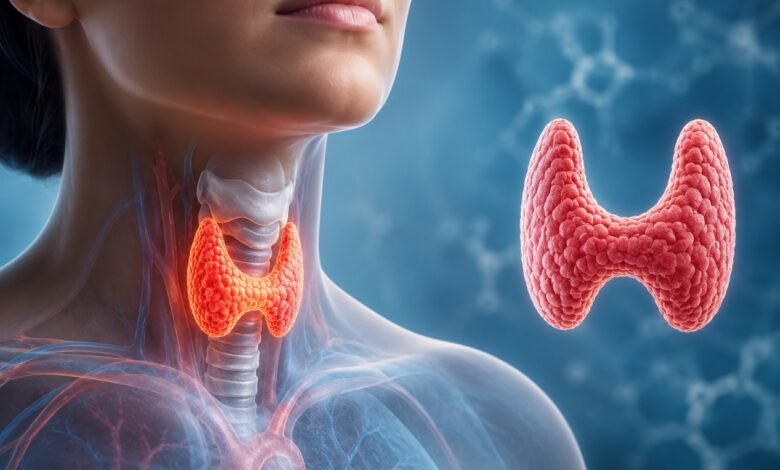
The thyroid is one of the most important endocrine glands in the human body. It is located at the front of the neck, below the larynx and in front of the trachea. The gland consists of two lobes connected by a thin bridge of tissue called the isthmus and produces hormones that are essential for the body’s normal functioning.
The main hormones secreted by the thyroid are thyroxine (T4), triiodothyronine (T3), and calcitonin. T4 and T3 directly influence metabolism, growth, and energy balance, while calcitonin plays a role in regulating calcium levels.
Proper thyroid function is crucial for overall health, as even minor disturbances can significantly affect a person’s daily life and well-being.
Functional Thyroid Disorders
Functional thyroid disorders are related to either excessive or insufficient hormone production.
Hypothyroidism occurs when the thyroid gland is underactive and does not produce enough hormones. Common symptoms include fatigue, weight gain, constipation, slow heart rate, sleep disturbances, difficulty concentrating, and dry skin.
In contrast, hyperthyroidism is characterized by excessive production of thyroid hormones. Patients may experience rapid heartbeat, excessive sweating, weight loss, nervousness, hand tremors, muscle weakness, and mood changes. In some cases, bulging eyes (exophthalmos) may also occur.
Graves’ disease is one of the most common causes of hyperthyroidism, while Hashimoto’s thyroiditis is an autoimmune condition most commonly associated with hypothyroidism.
Structural Thyroid Disorders
The most common structural thyroid conditions include goiter, thyroid nodules, and thyroid cancer.
Goiter refers to an enlargement of the thyroid gland and may be diffuse or multinodular. In many cases, it causes no symptoms; however, when it becomes significantly enlarged, it may lead to difficulty breathing or swallowing.
Thyroid nodules are a common finding and are usually benign. Small nodules are often discovered incidentally during imaging studies, while larger nodules may cause pressure symptoms in the neck or affect thyroid function.
Thyroid cancer has become increasingly common in recent years. Fortunately, most types have excellent cure rates when diagnosed early and treated appropriately with surgery.
When Is Thyroidectomy Necessary?
Thyroidectomy is the surgical removal of all or part of the thyroid gland. The procedure may be required in cases of thyroid cancer, multinodular goiter, large thyroid nodules, or hyperthyroidism that does not respond adequately to medical treatment.
Total thyroidectomy is performed under general anesthesia and requires a high level of surgical precision, as the thyroid is located close to delicate anatomical structures, including the recurrent laryngeal nerves, parathyroid glands, trachea, and esophagus.
Modern thyroid surgery utilizes minimally invasive techniques through a small neck incision, as well as advanced technologies such as ultrasonic shears and intraoperative nerve monitoring. These innovations help reduce complications and promote faster recovery.
Recovery and Life After Thyroidectomy
Hospitalization following thyroidectomy is usually brief, and most patients return to their normal daily activities within a relatively short period.
After complete removal of the thyroid gland, lifelong thyroid hormone replacement therapy with levothyroxine is required to compensate for the hormones no longer produced by the gland.
Potential complications such as hoarseness, bleeding, or temporary hypocalcemia are uncommon, particularly when the procedure is performed by an experienced surgeon specializing in thyroid and endocrine surgery.
For more information, you may contact Thyroid Surgeon Dimitrios Gialvalis.