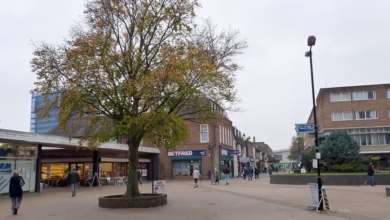
Why Are Detached Bungalows Rare Among Listings From Letting Agents in Bedford?

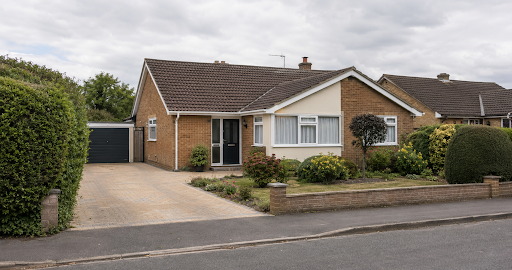
Walk around Kempston, Biddenham or Goldington and you’ll notice something odd if you’re actually counting property types rather than just admiring front gardens: detached bungalows barely feature. Semi-detached houses, yes. Terraces near the town centre, plenty. But a proper standalone bungalow, set back from the road with its own driveway, is genuinely hard to come by. Anyone who has spent time with professional letting agents in Bedford will tell you the same thing, and it’s not because nobody wants one. Demand appears strong relative to the limited supply, and that mismatch is what makes this such an interesting quirk of the local market. To understand why, you have to look past the listings themselves and into how Bedford actually grew.
The town’s expansion happened in waves that didn’t favour single storey homes. Postwar development, particularly through the 1950s and 60s, leaned heavily on semis and terraces because they made better use of tight plots close to the railway and the river. Land was, and still is, a finite resource in a market town hemmed in by the Great Ouse on one side and agricultural land on the other. Because building upward gets you more homes per acre than building outward, developers of that era simply didn’t see the appeal in a housing type that eats land without offering much in return.
Why Land Economics Work Against Bungalows
A bungalow needs roughly the same footprint as a two storey house but only delivers half the living space. That’s not a controversial statement, it’s basic arithmetic, and it’s exactly why so few were built in Bedford’s more established neighbourhoods. Developers working within Bedford Borough Council’s planning constraints have generally had an incentive to maximise density, and a single storey dwelling works against that goal every time. So when you do see a pocket of bungalows, in areas like Elstow Road or parts of Putnoe, they tend to date from a specific period when land was cheaper and expectations around density were looser.
It’s worth saying that this isn’t unique to Bedford. Many English market towns show a similar pattern, but Bedford’s version feels sharper because of how much of its housing stock was laid down in that narrow postwar window. And once a street is built up with terraces and semis, it rarely gets retrofitted with bungalows later. The land is already spoken for, the plots are already subdivided, and any new single storey building would need to justify itself against far more profitable alternatives.
Who Actually Wants a Bungalow in Bedford
The people chasing bungalows in Bedford tend to fall into two groups, and they don’t always overlap the way you’d expect. Older buyers looking to downsize without giving up a garden make up the larger share, drawn by the appeal of living without stairs as mobility becomes a bigger consideration. But there’s also a smaller, quieter group of younger families who like the idea of single storey living for entirely different reasons, often tied to accessibility needs or simply a preference for a smaller, more manageable home. Neither group finds much to choose from, which pushes up competition whenever one does come to market.
Bungalows in areas such as Goldington and Great Denham may attract strong interest when they appear, although sale speed and final price vary by property and market conditions. This may reflect demand for a limited housing type. Because supply is so limited, buyers who are set on a bungalow often end up widening their search radius into surrounding villages such as Wootton or Elstow, where slightly more generous plots survive from an earlier building era.
Where the Few Remaining Bungalows Tend to Sit
If you’re actually hunting for one, the older pockets around Kempston and the outer edges of Putnoe are worth a look, along with a handful of streets near Bromham Road that escaped the densification that hit the town centre. These tend to be modest three bedroom properties built in the 1960s, often extended over the decades to add space without adding a second storey. Honestly, once you know what to look for, you start noticing how consistently these homes cluster in the same handful of roads rather than being spread evenly across the town.
Newer developments often include relatively few bungalows. Housebuilders working on sites around Wixams or the edges of Kempston have, for the most part, stuck to conventional two and three storey homes because that’s what the planning viability calculations tend to favour. A bungalow on a plot that could hold a four bedroom house may generate less revenue than a larger multi-storey home, and that’s before you factor in how much harder it is to hit local housing targets with lower density schemes. So while there’s clearly appetite for more single storey stock, the economics of new build development work against it at nearly every turn.
The Commuter Factor
Bedford’s rail links to London, with journey times varying by service and destination, have shaped demand in ways that indirectly squeeze bungalow supply even further. Commuters buying into Bedford generally want family sized homes close to the station or within easy reach of the A421, and that demand keeps pushing developers toward higher density, multi storey schemes rather than the land hungry alternative. It’s a bit of a vicious cycle: the more attractive Bedford becomes to commuters, the less room there is for the housing type that doesn’t serve that market well.
That said, there are areas slightly further out, around Bromham and Biddenham, where the commuter pull is a touch weaker and older bungalow stock has survived a bit better. These villages sit close enough to Bedford to still feel connected, but far enough that the intense pressure for high density housing hasn’t reshaped every street. Buyers who are flexible about location often find their search leads them here rather than into the town itself.
Final Thoughts
What’s interesting about Bedford’s bungalow shortage is that it isn’t really a story about changing tastes or shifting demand, it’s a story about land use decisions made decades ago that continue to shape what’s available today. Every postwar planning choice that favoured density over single storey living still echoes through the current listings, and new development may not reverse that pattern quickly. For buyers who are genuinely set on this kind of home, the smarter approach may well be looking slightly beyond Bedford’s immediate boundaries, into the villages where older, more generous plots managed to survive. That’s arguably where the town’s bungalow story is quietly continuing, even if the town centre itself has largely moved on from it.