The market for fake football shirts is huge, and distinguishing the genuine from the counterfeit is becoming more difficult with each passing year. The counterfeiters have improved their skills greatly, to the point where they even manage to mimic the logos, stitching, and packaging of the original shirts pretty well. Moreover, a large number of the jerseys that one finds on random marketplace listings appear quite authentic when you only see their photographs. The real dilemma is that when you finally receive the parcel and recognize that the badge is peeling or the colors slightly differ, you have already made the payment.
Shopping through the internet is quite risky since you cannot physically examine the cloth, determine the weight, or inspect the stitching closely before parting with your money. Consequently, it makes it even more crucial to be thoroughly familiar with the various aspects related to the listings, merchants, and prices that should be considered before you make a purchase online.
These are the actual working ways that will enable you to steer clear of fake products, as they are revealed through the very signs that counterfeiters fail to eliminate even after elevating their techniques to the highest level.
Price Is the First Clue, but Not the Only One
When a tee of a major club of the current season is sold for 25 or 30 euros on a platform, whereas the same one is listed at 90 in the official store, there is a clear mismatch. This is the main sign, and counterfeiters are aware that, if the desire for a bargain is great enough, people will even overlook it.
The genuine player editions are usually priced between 130 and 170 euros depending on the club. Replica versions are generally 70 to 100. At the moment when you get to know that the “authentic” jerseys are being sold at 40 euros, probably you are dealing with a counterfeit, whatever the listing says.
However, price per se is not evidence. Some honest sellers have legitimate sales, especially on last season’s kits, clearance items, or overstock. A piece of clothing from two seasons ago that has been marked down to 40 euros on a real seller’s site is not immediately a matter of concern. The real warning sign is high-demand, new season shirts priced significantly lower than what the official store charges.
Be extra skeptical around major tournaments. When fans are rushing to get a shirt for the 2026 World Cup, fake sellers flood marketplaces with convincing-looking listings at tempting prices. If you want the real thing without counterfeit risk, stick with official club stores or established specialist retailers like get a shirt for the 2026 World Cup that actually source their stock from licensed distributors.
What to Look for in Listing Photos
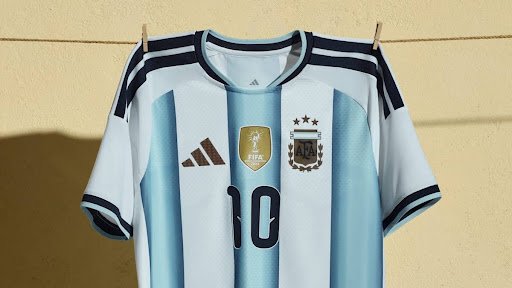
In fact, most fakes can be spotted right at the photo stage if you are looking for the right clues. For instance, start by inspecting the club crest. Authentic football shirt badges are always crisp, symmetrical, and located exactly where they ought to be. In contrast, fake ones will usually show signs such as slightly blurred edges, colors not quite matching the club’s official palette, or a crest that is even a few millimeters off-center.
Sponsor logos are yet another clue that may reveal the shirt to be fake. Counterfeiters tend to have fonts that are slightly off – a letter that is a bit too thick, spacing that seems wrong, or a color of the sponsor that is a lot different from the genuine one. If you keep a reference photo of the official product store open in another tab, a side-by-side comparison usually exposes the difference in a matter of seconds.
Also, don’t forget the back of the jersey. The manufacturer’s logo (Nike, adidas, Puma, Castore, Umbro) must be neat and correctly positioned. Fake ones may exhibit things like slightly distorted swooshes, adidas stripes that are not quite straight, or Puma cats that have probably been redrawn from memory.
Stitching, Tags, and the Details That Matter
The inside of a shirt is usually a good place to find the truth. Genuine jerseys are characterized by neat and uniform stitching without any loose threads, uneven seams, or traces of glue. On the contrary, fake shirts tend to have quite disorganized internal stitching since the quality control is not considered part of their production.
One of the most trustworthy signs is the neck label. Authentic garments feature tags that are either printed or stitched correctly and display the size, fabric content, country of manufacture, as well as brand-specific codes. Counterfeit products usually make mistakes in these aspects -writing errors, off-center type, tags that are sewn in a twisted way, or plain tags that do not correspond to what the real brand uses in that season.
Official jerseys are also equipped with a hologram or an authenticity sticker either on the care label or the packaging, depending on the brand. Nike uses a QR code for some items. Adidas has particular style codes, which you can check against their official product database. Puma has its own traceability marks. While none of these are impossible to replicate, counterfeiters usually omit them completely or produce very crude imitations.
Where You’re Buying From Matters More Than Anything
The seller and the platform are actually a much bigger clue to the authenticity of the shirt than the shirt itself. Official club online shops and licensed retailers’ websites are the least risky options. They have brand licensing, valid supply chains, and proper customer service in case of issues.
On massive marketplace websites like eBay or Amazon, third-party sellers can be anywhere on the spectrum from completely legitimate to fully counterfeit operations. It’s best to check the history of the seller, reviews, and how old the account is. A brand new seller with a few listings of current-season shirts at suspiciously low prices is hardly the profile of a legitimate operation.
Social media marketplaces are where the risks are highest. Instagram accounts promising “1:1 quality” jerseys at 30 euros with shipping from Asia are basically selling fakes – actually, “1:1” in counterfeiting means “as close to the real thing as possible.” The same goes for WhatsApp sellers, random Facebook groups, and ads that lead you to dubious websites.
When the Shirt Arrives, Inspect It Immediately
It IS possible that some counterfeits slip through vetting, notwithstanding the fact that it is done very carefully. Do not hurry to cut the tags and wash the shirt the instant your shirt is delivered to you. You are expected to carry out a thorough examination of the badge, sponsor, and manufacturer logo by comparing them to high-quality images on the official club store.
Touch the material. The original contemporary kits are made of a fabric of a certain density and feel – not too heavy, not too thin, but with a well-defined structure. It is common for fakes to be either too limp and plasticky or oddly thick and rough. The numbers and letters that you have ordered for personalizing should be perfectly applied with no bubbles or edges lifted.
Smell is very significant. Counterfeit shirts may be accompanied by a strong chemical smell resulting from the use of cheap dyes and lower-quality fabrics. On the other hand, real jerseys almost smell of nothing if only a slight odor of polyester is detectable.
The Takeaway
Identifying fake football shirts online essentially relies on patience, being suspicious of prices that are too low, and spending a little time to closely examine the product before making a purchase. Counterfeiters may be good at replicating jerseys, but they are not perfect, and if you are literate, you can easily detect the fake shirt as the signs are almost always present.
Choose only trustworthy sellers, use platform payments that offer buyer protection, and check the product against the official page of the team and product before buying. A genuine shirt is meant to make you glad you have it on, not worried the minute someone points out your fake badge from afar.