Technology in 2026 is moving very fast. Every year, systems become bigger, smarter, and more connected. Businesses now use cloud apps, AI tools, smart devices, and online services every single day. Because of this growth, old software systems are starting to feel slow and heavy. This is where SOA OS23 becomes important.
You may have heard people talk about modular systems, APIs, cloud tools, or microservices. All of these ideas connect to SOA OS23. It is not just a small upgrade. It is a smarter way to build systems so they are fast, safe, and easy to manage.
In this article, we will explain SOA OS23 in very simple words. We will talk about what it is, why old systems struggle today, how it works, and what features make it powerful.
What Is SOA OS23?
SOA OS23 stands for Service-Oriented Architecture Open Standard 2023. That may sound big, but the idea is simple. It is a modern way to build software by breaking it into small parts called services. Each service does one job only.
For example, imagine a shopping app. One service handles login. Another handles payments. Another manages product data. Instead of one big system doing everything, SOA OS23 divides tasks into small, clear parts.
The “23” shows that this version was built for modern needs. It supports cloud systems, containers, AI tools, and strong security. It improves older service-oriented models and makes them ready for today’s digital world.
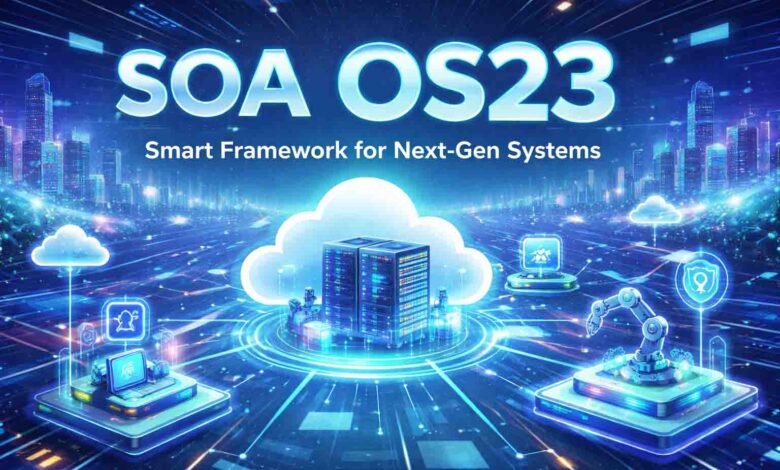
In short, SOA OS23 is a smart framework that helps businesses build flexible, safe, and scalable systems. It is designed for next-generation platforms that need speed, safety, and smooth growth.
Why Old Systems Are Not Enough Today
Many old systems use something called monolithic architecture. This means everything is built into one big block. If one small part needs an update, the whole system may need changes. That can cause delays and downtime.
Imagine trying to fix one small room in a house, but you must shut down the entire building. That is how old systems often work. They are hard to update, hard to scale, and risky when something breaks.
Today, businesses use AI, cloud services, mobile apps, and smart devices. Old systems struggle to connect with these modern tools. They are not flexible enough for real-time data and fast growth.
This is why SOA OS23 matters. It solves these problems by using small, independent services. It makes systems easier to update, easier to expand, and much safer to manage.
How SOA OS23 Works
The core idea behind SOA OS23 is simple. It breaks a big system into many small services. Each service handles one clear job. These services work alone, but they talk to each other using APIs.
APIs are like messengers. They allow services to send and receive information. For example, the payment service can ask the user service to confirm identity before processing money. Everything happens smoothly through secure connections.
SOA OS23 also uses something called an API gateway. This gateway manages traffic. It controls security, balances system load, and limits how many requests can happen at once. This keeps the system stable and fast.
Another important part is monitoring. SOA OS23 includes built-in tracking tools. These tools show logs, system health, and performance data in real time. This helps teams quickly find and fix problems before they grow bigger.
Features of SOA OS23
1. Modular Service Design
One major feature of SOA OS23 is modular design. This means services are built separately. If one service needs an update, you do not touch the others. This reduces risk and saves time.
Teams can work on different services at the same time. This speeds up development. Businesses can launch new features faster without breaking the whole system.
2. API-First Communication
SOA OS23 uses APIs as the main way for services to talk. These APIs follow standard formats like REST or GraphQL. This makes communication clear and organized.
An API gateway controls security, version updates, and traffic limits. This helps systems stay smooth even when many users are online at once.
3. Built-In Observability
Observability means the system can watch itself. SOA OS23 includes tools like Prometheus, Grafana, and OpenTelemetry to track performance.
Logs, metrics, and traces are shown on dashboards. This helps teams see what is happening inside the system in real time. If something slows down, they can fix it quickly.
4. Multi-Protocol Support
Different systems use different communication styles. SOA OS23 supports many protocols like REST, SOAP, MQTT, WebSockets, and more.
This makes integration easier. Whether the system connects to cloud apps, IoT devices, or older software, it can communicate without problems.
5. Container-Ready Structure
Modern systems often run inside containers like Docker. SOA OS23 is built for this from the start. It works smoothly with Kubernetes for managing containers.
This makes deployment faster and scaling easier. Services can grow or shrink depending on traffic and demand.
6. High Availability Design
SOA OS23 is designed to stay active even if one service fails. If one part has a problem, it does not shut down the whole system.
It supports rollback tools and version control. This means updates can be reversed safely if something goes wrong.
Strong Security in SOA OS23
Security is one of the strongest parts of SOA OS23. It follows a zero-trust model. This means no request is trusted automatically. Every request must prove it is allowed.
The system uses multi-factor authentication and JWT tokens to confirm identity. It also uses AES256 encryption to protect data while it moves between services.
Another key rule is least privilege access. This means users and services only get the permissions they truly need. Nothing more. This reduces damage if something goes wrong.
SOA OS23 also tracks every request through call auditing. This creates a full record of system activity. It helps companies meet rules and stay safe from threats.
Cloud and Container Support
In 2026, most modern systems run in the cloud. Companies no longer depend only on one physical server. They use cloud platforms like AWS, Azure, or Google Cloud to store data and run apps. SOA OS23 is built for this cloud world from the start.
This framework works well in private, public, and hybrid cloud setups. That means businesses can choose where to run their services. They can even mix different cloud providers if needed. This gives them more control and flexibility.
Another big part of SOA OS23 is container support. It works smoothly with Docker and Kubernetes. Containers help pack services into small units that can move easily between servers. This makes updates fast and safe.
If traffic suddenly increases, the system can scale up quickly. If traffic drops, it can scale down to save resources. This smart scaling keeps performance strong and costs lower at the same time.
AI and Automation in SOA OS23
In 2026, AI is part of almost every modern system. SOA OS23 is ready for this change. It supports AI and machine learning tools inside its structure. This allows services to learn from data and improve over time.
For example, an AI service can watch user behavior and adjust recommendations. Another AI tool can detect unusual activity and stop fraud before damage happens. These smart tools work smoothly inside the SOA OS23 framework.
Automation is another strong part. Many tasks that once needed manual work can now run automatically. Workflows move from one service to another without delays. This saves time and reduces human error.
Over time, systems built with SOA OS23 can even adjust themselves. They can manage traffic, optimize resources, and improve performance based on real-time data. This makes the system more intelligent and future-ready.
Real-Life Uses of SOA OS23
Many industries already use SOA OS23 to improve their systems. In healthcare, hospitals connect patient records with monitoring systems. Data moves safely between doctors, labs, and insurance providers.
In banking, financial companies connect payment systems, fraud detection tools, and identity checks. This speeds up transactions and improves safety. Some fintech companies have reported faster deployment and lower infrastructure costs after switching to this model.
In smart manufacturing, machines send real-time data to cloud systems. Services analyze performance and predict maintenance needs. This reduces downtime and improves production flow.
Retail and logistics companies also benefit. Online stores connect inventory, shipping, and customer systems together. This creates smooth order processing and faster delivery tracking.
Benefits of SOA OS23
1. Faster Development
With SOA OS23, teams can work on different services at the same time. This speeds up software development. New features can be added without stopping the whole system.
Updates are smaller and safer. If one service needs a fix, only that part changes. This reduces risk and keeps users happy.
2. Better System Stability
If one service fails, it does not shut down the entire system. This is called fault isolation. It makes systems more stable and reliable.
Rollback tools allow teams to reverse updates quickly if something goes wrong. This keeps downtime low and protects user trust.
3. Easy Integration
Modern businesses use many tools. SOA OS23 makes it easier to connect old systems with new ones. Middleware and APIs help everything work together smoothly.
It supports many communication protocols. This allows companies to reuse older systems while still upgrading to modern platforms.
4. Stronger Security
The zero-trust model adds extra protection. Every request must prove it is safe. This reduces the risk of security breaches.
Encryption and access controls protect sensitive data. This is very important for industries like finance and healthcare.
5. Scalability and Growth
Businesses grow over time. SOA OS23 supports both horizontal and vertical scaling. Services can expand easily when demand increases.
This helps systems handle more users without slowing down. It keeps performance smooth even during peak traffic times.
Challenges When Adopting SOA OS23
Even though SOA OS23 offers many benefits, adoption can take effort. Setting up a new system may require time and money. Companies may need new infrastructure and tools.
Teams also need training. Developers must understand microservices, APIs, containers, and monitoring tools. Learning new skills takes patience.
Migration from older systems can be complex. Some workflows may slow down during the transition period. Careful planning is important to avoid confusion.
However, most companies find that long-term benefits outweigh short-term challenges. Once the system is running smoothly, it becomes easier to manage and improve.
The Future of SOA OS23
Looking ahead, SOA OS23 is expected to grow even more. AI-driven orchestration will become stronger. Systems will automatically manage traffic and fix small issues without human help.
Blockchain integration may also increase. This can add secure tracking and smart contracts inside services. It will improve trust and transparency.
Digital credential systems may become standard. This will make identity management easier and safer across distributed systems.
As more companies move to cloud and edge computing, SOA OS23 will continue to support these modern needs. It is designed to adapt and evolve.
SOA OS23 vs Traditional Systems
Traditional systems are often rigid and hard to change. They struggle with scaling and modern integration. Updating them can feel like rebuilding the entire system.
In comparison, SOA OS23 is flexible and modular. It supports fast updates and smooth integration with new technologies.
Security in older systems may rely on simple protection layers. SOA OS23 uses zero-trust rules and strong encryption. This creates deeper protection.
When it comes to automation and AI support, traditional systems fall behind. SOA OS23 is built for modern digital growth and advanced tools.
Final Thoughts
In 2026, businesses need systems that are smart, fast, and secure. SOA OS23 offers a clear solution. It breaks systems into simple services, connects them through APIs, and protects them with strong security.
It supports cloud platforms, containers, AI tools, and automation. It helps businesses scale smoothly and adapt to change.
While adoption may require effort, the long-term rewards are strong. Better stability, faster updates, improved security, and future-ready design make SOA OS23 a powerful framework. If companies want to build next-generation systems that last, SOA OS23 is a smart and reliable choice.
FAQs
Why is SOA OS23 important in 2026?
In 2026, businesses use cloud apps, AI tools, and smart devices. Old systems struggle to handle this growth. SOA OS23 supports modern technology. It helps companies scale easily, improve security, and update systems without major downtime.
How is SOA OS23 different from old systems?
Old systems are built as one large block. If one part breaks, everything can stop. SOA OS23 splits the system into smaller services. If one service fails, others continue working. This makes it more stable and flexible.
Does SOA OS23 support cloud platforms?
Yes, SOA OS23 works very well with cloud platforms like AWS, Azure, and Google Cloud. It also supports private and hybrid cloud setups. This allows businesses to run their services anywhere they choose.
Is SOA OS23 secure?
Yes, security is one of its strongest points. It uses a zero-trust model. Every request must be verified. It also uses encryption and secure tokens to protect data. This makes it safer than many traditional systems.
Can SOA OS23 work with old systems?
Yes, it can connect with older systems using APIs and middleware tools. This allows companies to upgrade slowly without throwing away their existing software.
People Also Read:
Türk Idla Explained – The New Creative Wave Shaping Turkey’s Digital World