Why Bromley Is Suddenly Becoming the Most Affordable Place for Families in the UK

House prices across London still make a lot of families pause for thought, especially those trying to balance space, schools, and a commute that doesn’t eat half the week. Yet Bromley keeps coming up in conversations for a fairly simple reason: compared with many other parts of Greater London, you still get something that feels liveable without stepping entirely out of reach. That’s partly why people searching through estate agents in Bromley helping local buyers, are often families who assumed London had already priced them out.
What makes Bromley interesting is that it doesn’t rely on hype. You will not find the kind of flashy reinvention that estate brochures love to oversell. Instead, the area has shifted gradually, and honestly, that tends to be more sustainable. Buyers are looking beyond postcodes with trend value attached to them, and Bromley benefits because it still feels practical in ways many parts of London no longer do.
Families Are Looking at Space Differently
A few years ago, many buyers focused heavily on being close to central London nightlife or office districts. Now, particularly for families with younger children, priorities have changed quite a bit. Gardens matter again. Storage matters. Being able to walk to a decent park without crossing six busy roads matters more than people realise.
Bromley, especially around Bickley, Hayes and Shortlands, offers exactly that sort of balance. The housing stock is varied too, which helps keep parts of the borough comparatively affordable. Victorian terraces sit alongside 1930s semis and post-war family homes, so buyers are not restricted to one price bracket. And because the borough itself is large, there’s a fair amount of flexibility depending on budget.
That flexibility is important because buyers are often compromising somewhere. Some will accept a slightly longer train journey if it means an extra bedroom. Others care more about school catchments than commuting times. Bromley manages to sit in the middle of those competing priorities better than most nearby boroughs.
The Commute Still Works, Which Changes Everything
Affordability means very little if getting to work becomes exhausting. That’s one reason Bromley has stayed consistently attractive rather than simply becoming a temporary budget option. Trains from Bromley South into London Victoria can take around twenty minutes in good conditions, and that keeps the area firmly connected to central London employment.
But there’s another side to this that often gets ignored. A lot of people are no longer commuting five days a week. Because hybrid working has settled into normal life for many office workers, buyers are now willing to live slightly further out if daily life improves overall. So a family that once insisted on Clapham or Greenwich may now look at Bromley and think the trade off actually feels reasonable.
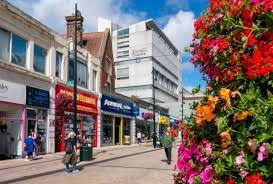
The town centre itself also plays a part. Bromley High Street, along with The Glades shopping centre, gives residents most of what they need day to day without travelling elsewhere. That sounds basic, but convenience quietly shapes buying decisions. Nobody wants every school run or supermarket trip to feel like a logistical exercise.
Schools Continue to Pull Buyers South East
Parents tend to research schools before almost anything else, and Bromley benefits from having several well regarded state and grammar options nearby. Areas around Langley Park schools and Bullers Wood have drawn family demand for years, although prices around those catchments can climb quickly once homes hit the market.
Still, compared with equivalent school focused areas in west or south west London, Bromley can look surprisingly manageable. That does not mean cheap, because nowhere in London really is anymore, but buyers often feel they are paying for something tangible rather than simply postcode prestige.
And there’s a broader point here too. Bromley still feels suburban in the traditional sense of the word. Streets are generally quieter, green space is easier to find, and there’s less of the density that some families struggle with after having children. For people leaving smaller flats in inner London, that shift can feel substantial almost overnight.
Buyers Are Comparing Bromley With Places They Never Used To
Ten years ago, someone considering Bromley might also have looked at Croydon or parts of Essex. Now the comparisons are changing. Buyers increasingly weigh Bromley against places like Wandsworth, Richmond or even outer parts of north London, because prices elsewhere have climbed so sharply.
That comparison tends to favour Bromley once square footage enters the conversation. A semi-detached house near Beckenham or Petts Wood may still cost a significant amount, but buyers often realise they would receive far less space in many other boroughs for the same budget. And for families trying to stay in London without sacrificing entirely how they want to live, that calculation matters a lot.
There is also a psychological factor involved. Bromley feels established rather than speculative. Some London districts rise rapidly because investors move in first, but Bromley’s demand is usually driven by owner-occupiers. Generally speaking, that creates steadier neighbourhoods and a stronger sense of continuity, which families tend to value even if they do not say it directly.
A Slower Housing Market Has Helped Bromley
The property market has cooled compared with the frantic conditions seen during the pandemic years. Yet Bromley has arguably benefited from that slowdown because buyers are thinking more carefully now. Instead of chasing whatever appears fashionable, many are looking at long-term practicality.
Because interest rates have affected affordability across the country, families are scrutinising value much more closely. That has pushed some buyers away from ultra-competitive inner London locations and towards boroughs where homes still feel proportionate to the asking price. Bromley fits neatly into that conversation.
To be fair, there are still expensive pockets. Homes around Chislehurst and Keston can command serious money, particularly larger detached properties. But the borough as a whole offers enough variety that buyers are not automatically excluded if they cannot stretch to the top end of the market. That range helps maintain demand from different income groups rather than narrowing the area to one type of buyer.
Final Thoughts
Bromley’s appeal probably says as much about London’s wider housing market as it does about Bromley itself. Families are reassessing what they actually need, and many are discovering that being slightly further from the centre no longer feels like a sacrifice if daily life becomes easier.
What happens next will depend partly on transport costs, mortgage rates and whether hybrid working continues in its current form. But right now, Bromley occupies an unusual position. It still offers a version of London family life that feels achievable for people who had almost given up on finding space, decent schools and a workable commute in the same place. And honestly, that combination has become surprisingly hard to find.