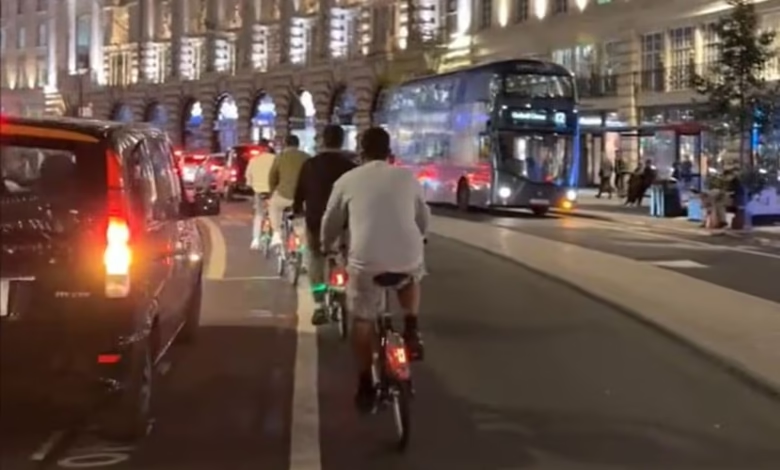
London resists strict planning, and that becomes clear the moment you start riding rather than looking at a map. You can draw the perfect line the night before, but the city will interrupt it within minutes through traffic, pedestrians, or simply the way roads connect in practice rather than in theory. Because of that, the most effective way to approach a two-day cycling trip across London is to treat the route as a flexible framework instead of a fixed instruction set. Starting in East London, especially around Hackney or London Fields, gives you a manageable entry point into the ride without immediately dealing with the pressure of central traffic. From there, the general idea is simple: follow the Regent’s Canal west, cut through central green spaces like Hyde Park, cross the Thames, and settle somewhere south of the river for the night before looping back through Greenwich on the second day. What makes this approach work is not the exact streets you take, but the freedom to adjust constantly without feeling like you are deviating from a plan.
That flexibility becomes even more important when you consider how many parallel routes London offers. If one road becomes frustrating, there is almost always another option within a few minutes. This allows you to prioritise comfort and flow rather than speed or directness. Navigation tools like Google Maps or Komoot can help you stay oriented, but they often favour efficiency over ride quality, which can lead you onto busier roads than necessary. Learning to trust your judgement after the first couple of hours changes the entire experience. You begin to read the city in real time, choosing streets that feel right rather than ones that look correct on a screen. Your bike choice also plays into this flexibility. A gravel or hybrid bike gives you the confidence to take shortcuts through parks, along canal paths, or across uneven surfaces without hesitation, while a pure road bike can limit your options in ways that become frustrating over time.
Packing lightly is not just a recommendation, it directly affects how enjoyable the ride feels. A compact tent or bivvy, a lightweight sleeping bag, basic repair tools, a power bank, and a single change of clothes are enough for two days. Anything beyond that becomes noticeable every time you stop at lights or push through crowded areas. London cycling is full of stop-start movement, and weight matters more than it would on a continuous long-distance ride. Timing also plays a major role. Early morning offers the smoothest riding conditions, midday slows everything down, and late afternoon opens up again. Aligning your movement with that rhythm allows you to cover ground without forcing it, which ultimately makes the entire experience feel more natural and far less stressful.
Day One: From Hackney to the Thames
The first day begins in the kind of place where cyclists already move naturally, such as Broadway Market or London Fields. A quick stop at L’Eau à la Bouche gives you coffee and something simple to eat without delaying the start of the ride, which matters more than you might expect. Sitting down for a full breakfast sounds appealing, but it breaks momentum before you have even established it. The goal of the first hour is to settle into the bike, not to treat the morning like a leisurely outing. Riding through Hackney into Shoreditch, the streets feel active but not yet overwhelming, with delivery vans unloading, small shops opening, and early commuters moving in predictable patterns. The environment looks chaotic at first, but the slower pace allows you to read it rather than react to it, which is what makes it manageable.
As you continue, your awareness sharpens. You begin to anticipate movement instead of responding to it, which changes how the ride feels almost immediately. This is where London cycling becomes less stressful and more intuitive. Picking up the Regent’s Canal near Victoria Park introduces a completely different rhythm. Traffic disappears, the noise drops, and the ride slows down whether you want it to or not. The towpath forces patience, but it also offers something the roads cannot: proximity to everyday life in a quieter, more personal way. Passing through areas like Haggerston and De Beauvoir Town, you see houseboats lined along the water, each one reflecting a different lifestyle. Some are carefully maintained, others look like ongoing projects, but all of them add texture to the ride. People sit outside drinking coffee, working, or repairing small details, and you pass close enough to notice these moments without interrupting them.
Camden changes the pace again. As you approach Camden Lock Market, the towpath becomes crowded, and progress slows significantly. This is where you make a practical decision. Stopping for food makes sense, but only if it remains efficient. Camden Market offers plenty of options, but the goal is not to explore, it is to refuel. A quick meal from a street vendor works far better than sitting down, especially because navigating a loaded bike through tightly packed restaurant chairs quickly becomes more effort than it is worth. Once you leave the canal and head towards Hyde Park, the contrast is immediate. The space opens up, the paths widen, and for the first time you can ride at a steady, uninterrupted pace. Hyde Park acts as a reset point where you can circle through wide lanes, stop near the Serpentine, and allow your body to recover from the stop-start nature of the earlier sections.
Moving towards the Thames brings you back into a denser environment, but by this point your confidence has increased enough that it feels manageable. Crossing at Albert Bridge or Chelsea Bridge avoids some of the heavier congestion, and once you reach the South Bank, the ride shifts again into a slower, more controlled pace dictated by pedestrian movement. Areas like Battersea Power Station offer a cleaner, less chaotic entry into the riverfront compared to central zones, giving you space to ride without constant interruptions. As the day comes to an end, fatigue starts to influence your decisions. Dinner becomes functional rather than exploratory, and places like Flat Iron Square provide a reliable way to eat without waiting too long. The focus begins to shift away from riding and towards finding somewhere to sleep, which introduces a completely different set of considerations.
Night One: Where You Actually Sleep
Finding a place to sleep outdoors in London requires a different mindset from the rest of the ride. You are no longer looking for the best view or the most comfortable setting, but for a location that works quietly and safely for a few hours without drawing attention. Official campsites such as Lee Valley Camping and Caravan Park provide the most straightforward solution, offering facilities and security at the cost of being slightly outside the main route. Reaching them often requires an additional effort at the end of the day, which can feel significant when you are already tired. However, they remove uncertainty, which has its own value.
If you choose to stay closer to the city, the focus shifts towards discretion. Areas near the Thames, quieter edges of large parks, or less frequented green spaces can work if you approach them carefully. Timing becomes critical. Arriving late reduces the chance of being noticed, while leaving early avoids interaction with morning activity. Your setup should be as minimal as possible. A small tent or bivvy allows you to set up quickly and pack away just as fast, which matters more than comfort in this context. The less time you spend exposed, the better.
Your bike remains your most valuable asset, and keeping it secure is essential. Locking it to something stable if possible, or keeping it within reach if not, reduces risk. This part of the trip changes your awareness. You become more alert to sounds, movement, and changes in your surroundings, which carries into how you rest. Sleep is rarely perfect in this environment, but it does not need to be. A few hours of uninterrupted rest are enough to continue. Temperature drops more than expected, even in mild conditions, so having a lightweight layer within reach makes a noticeable difference. This overnight experience shifts the entire tone of the trip, turning it from a simple ride into something more self-contained and deliberate.
Day Two: South London to Greenwich
The second day begins early, before the city fully reactivates. This is when London feels most manageable. Streets that were crowded the previous day are open, and movement becomes fluid rather than reactive. Packing quickly and leaving your overnight spot without delay keeps the process simple and avoids unnecessary attention. The first few minutes on the bike may feel stiff, but that fades quickly as your body warms up and settles back into a rhythm.
South London offers a different kind of riding compared to the previous day. Areas like Deptford and Bermondsey feel less structured and often quieter, allowing you to maintain a steady pace without constant interruptions. A quick stop at a place like The Full Nelson in Deptford provides coffee and breakfast without slowing you down, which keeps the morning efficient. As you approach Greenwich, the route becomes slightly busier, but still manageable. Entering Greenwich Park introduces a short but noticeable climb, especially after a morning of riding, but the effort is rewarded once you reach the top near the Royal Observatory.
The view across the Thames towards Canary Wharf provides a clear sense of distance and progress, which naturally encourages you to slow down. This is the point in the trip where taking a longer break makes sense. Sitting on the grass, eating properly, and even walking for a short time helps your legs recover and prepares you for the return journey. Greenwich Market offers a practical food stop with enough variety to suit how you feel without requiring long waits.
The return along the Thames Path mirrors the canal from the first day. It is slower, more crowded, and requires attention. Sections near the Cutty Sark become busy, and progress can feel inconsistent. Leaving the river at the right moment improves the final stretch significantly. Cutting inland towards Bermondsey or London Bridge allows you to regain pace and finish the ride without unnecessary frustration.
Eating Like a Cyclist in London
Food choices during a cycling trip in London have a direct impact on how the ride feels. Approaching meals like a tourist leads to long waits and heavy food that slows you down, while approaching them like a cyclist keeps everything moving. Quick-service places such as bakeries and small cafés work best because they allow you to eat without losing time. Locations like E5 Bakehouse or Bread Ahead offer high-quality food that can be consumed quickly, which fits the rhythm of the ride far better than a full sit-down meal.
Timing is equally important. Eating before you feel hungry keeps energy levels stable and avoids the sudden drop that can occur if you wait too long. Smaller, more frequent stops work better than one large meal, especially when you are riding through a city that constantly interrupts your pace. Hydration is even more critical. Carrying enough water and refilling regularly prevents fatigue and helps maintain focus, which is essential when navigating busy streets.
Keeping meals light during riding hours improves comfort and performance. Heavy food slows digestion and makes it harder to stay active, which becomes noticeable within a short time. Saving more substantial meals for the end of the day makes more sense, when you are no longer moving and can fully recover. This approach keeps the ride consistent and avoids unnecessary fatigue.
What Two Days on a Bike Shows You About London
Cycling through London for two days changes how the city feels in a way that is difficult to replicate through any other form of transport. It stops being a collection of landmarks and becomes a connected system of spaces that shift rapidly from one to the next. You notice transitions that would normally go unseen, moving from quiet residential streets into busy commercial areas within minutes, then into open parks that break the pattern completely.
The contrasts become more visible as well. Areas of wealth and areas that feel neglected exist close together, often separated by only a few turns. Cycling exposes these differences without filtering them, giving you a more direct understanding of how the city functions. Distance also becomes more intuitive. Some places feel closer than expected, while others take longer due to interruptions, creating a more realistic sense of scale.
By the end of the ride, you move through London with more confidence. Decisions become faster, navigation feels natural, and the city itself becomes easier to read. Two days is not enough to see everything, but it is enough to understand how London works at ground level. Cycling does not simplify the city, but it reveals it in a way that makes sense once you have experienced it piece by piece.