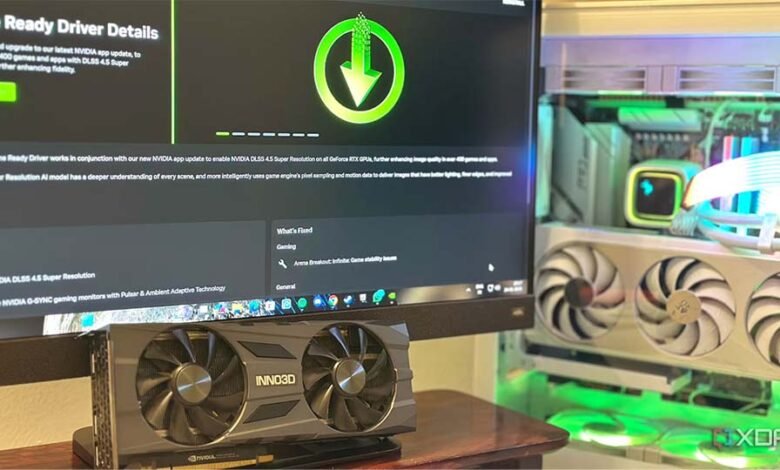
Have you ever launched a game, cranked everything to ultra settings, and then watched your FPS drop like a stone? I know I have — and for years, that was just “normal PC gaming life.” But things have changed dramatically. Today, AI upscaling technologies like NVIDIA DLSS, AMD FSR, and Intel XeSS are rewriting how we measure performance, how games are optimized, and even how we define “high-end gaming.”
And here’s the interesting part: when we talk about modern gaming ecosystems, platforms and communities like eclbet sg are also part of this evolving digital performance culture — where speed, responsiveness, and smooth experience matter more than ever.
So let’s break it down in a simple, human way.
What is AI upscaling, really?
At its core, AI upscaling means this:
Instead of your GPU rendering a game at full resolution (like 4K), it renders at a lower resolution (like 1080p or 1440p), and then AI reconstructs the image to look like 4K.
Sounds simple, right? But behind the scenes, it’s a mix of:
- Machine learning models trained on high-quality frames
- Motion vectors from the game engine
- Temporal data from previous frames
- Smart prediction of missing pixels
The result? You get higher FPS without dramatically losing visual quality.
And this is exactly where PC gaming benchmarks started to shift.
How AI upscaling changed performance benchmarks
Back in the day, benchmarks were straightforward:
- Native resolution FPS
- GPU load
- Temperature and power draw
Now? It’s more complicated — and more interesting.
1. “Native FPS” is no longer the only metric
I still remember when 60 FPS at native 1080p was the gold standard. Today, a game running at:
- 4K output
- DLSS Performance Mode
- 100+ FPS
…might actually be rendering internally at 1440p or even 1080p.
So the question becomes:
Are we benchmarking raw power or AI-assisted performance?
2. GPUs are judged by “AI efficiency,” not just horsepower
Modern benchmarking now considers:
- Frame generation (DLSS 3 / FSR 3)
- Upscaling quality vs performance gain
- Latency impact
- Frame stability (1% lows matter more than averages)
In other words, I don’t just ask “how fast is this GPU?”
I now ask: “How smart is this GPU with AI assistance?”
3. Frame Generation changed the game entirely
AI frame generation doesn’t just upscale — it creates new frames between existing ones.
This leads to:
- Extremely high FPS numbers (sometimes 2x–3x gains)
- Smoother motion perception
- But slightly higher input latency in some cases
So when you and I see “240 FPS” on screen, it may not be traditional rendering — it may be AI-assisted fluid motion.
That completely changes how we interpret benchmark results.
The real impact on gaming experience
Let’s be honest — benchmarks are great, but what we really care about is how the game feels.
Here’s what I’ve personally noticed (and you probably will too):
✔ Better performance on mid-range PCs
You don’t need a flagship GPU anymore to enjoy ultra settings. AI upscaling bridges the gap.
✔ Higher visual settings without hardware upgrades
We’re squeezing more life out of existing GPUs. That’s a win for everyone.
✔ More stable frame pacing
Even if FPS numbers fluctuate, gameplay feels smoother because AI fills gaps intelligently.
But is it perfect? Not yet.
I’ll be honest with you — AI upscaling is powerful, but not flawless.
Some limitations include:
- Slight ghosting in fast-moving scenes
- Occasional loss of fine detail
- Input lag concerns in competitive games
- Dependence on game engine integration
So while I love the technology, I also don’t blindly trust it for every scenario — especially esports titles where raw responsiveness matters more than visuals.
Benchmarking today: what really matters
If we want to evaluate gaming performance properly in 2026, we need a hybrid approach:
Instead of just asking:
“What is the FPS?”
We should ask:
- What is the base rendered resolution?
- Is AI upscaling enabled?
- What mode is used (Quality, Balanced, Performance)?
- How stable are the 1% lows?
- What is the input latency impact?
This is a much more realistic way to understand performance.
Where platforms fit into this evolution
Modern digital platforms — including gaming and entertainment ecosystems associated with eclbet sg — rely heavily on smooth real-time performance. Whether it’s live interaction, fast UI response, or streaming data, the same principle applies:
👉 lower latency + higher smoothness = better user experience
That’s exactly what AI upscaling indirectly supports in gaming: a more responsive, fluid digital environment.
The future: AI will define benchmarks, not just improve them
Here’s my honest prediction: we’re moving toward a world where:
- Native rendering becomes “baseline”
- AI-enhanced performance becomes “standard”
- Benchmarks will separate raw FPS vs AI FPS
- GPUs will be judged like “AI processors,” not just graphics cards
And you and I will eventually stop asking:
“What FPS do I get?”
Instead, we’ll ask:
“How intelligently does my system render this experience?”
Conclusion
AI upscaling didn’t just improve PC gaming — it redefined how we measure performance itself. Benchmarks are no longer just about brute force; they’re about intelligence, efficiency, and perception.
And honestly? That shift is only just beginning.
If you’re testing or optimizing systems today, don’t just look at raw numbers. Look at the experience. Because in 2026 and beyond, gaming performance is no longer just about power — it’s about how smartly that power is used.