9V Batteries for Smoke Detectors: Lifespan, Performance Behavior, and Maintenance Guide

Introduction
Smoke detectors are essential safety devices designed to detect early signs of fire and provide critical warning time. However, their reliability depends entirely on one small component: the battery.
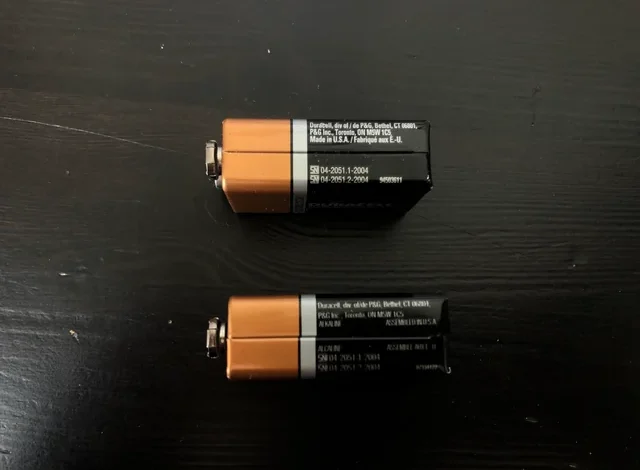
In most residential and commercial systems, 9v batteries for smoke alarms are used as the primary or backup power source. If this battery fails, the entire detection system becomes ineffective, regardless of how advanced the sensor is.
From real-world household experience, I’ve seen cases where smoke alarms begin issuing intermittent low-battery chirps long before complete failure—usually during seasonal temperature changes or after long idle periods. This highlights that battery performance is not just theoretical; it directly affects safety behavior in real environments.
Why Smoke Detectors Use 9V Batteries
9V batteries are widely used in smoke detectors because they provide:
- Stable nominal voltage (9 volts)
- Compact size for alarm housing
- Reliable low-current output over long periods
Smoke detectors do not require high power bursts; instead, they rely on continuous standby operation with occasional alarm activation. 9V batteries are well-suited for this low-drain profile.
Even during household power outages, battery-powered smoke alarms continue functioning independently, which is their primary safety advantage.
Types of 9V Batteries Used in Smoke Detectors
1. Alkaline 9V Batteries
- Most commonly used
- Affordable and widely available
- Suitable for basic residential smoke alarms
Limitation:
Voltage drops more noticeably over time, especially in older devices or warmer environments.
2. Lithium 9V Batteries (Primary Cells)
- Higher energy density
- Longer service life
- More stable voltage output over discharge cycle
In practical use, lithium 9V batteries tend to maintain consistent alarm readiness longer, especially in rarely tested or hard-to-access smoke detectors.
3. Rechargeable 9V Batteries
- Can be reused multiple times
- Lower long-term cost in theory
Important limitation:
Many rechargeable 9V batteries have lower and less stable voltage output (often 7.2V–8.4V instead of 9V nominal),how long does a 9V battery last in smoke detector. For this reason, they are generally not recommended for life-safety devices unless explicitly approved by the manufacturer.
How Long Does a 9V Battery Last in a Smoke Detector?
Battery life depends heavily on chemistry and environmental conditions:
- Alkaline 9V batteries: ~6 months to 1 year
- Lithium 9V batteries: ~2 to 5 years
Practical Behavior Observation
In real household use, alkaline batteries often show early warning chirps during:
- Winter temperature drops
- Long periods of inactivity
- Dust accumulation in the detector housing
Lithium batteries tend to provide more consistent performance in similar conditions, with fewer premature low-battery alerts.
Technical Factors That Affect Battery Life
1. Temperature Impact
Smoke detector batteries are sensitive to temperature changes:
- High heat accelerates chemical degradation
- Cold environments increase internal resistance
Both conditions can trigger early low-voltage warnings even when battery capacity remains partially unused.
2. Device Current Consumption
Even though smoke detectors are low-power devices, they still:
- Continuously monitor air particles
- Perform periodic self-tests
- Trigger alarm circuits during events
This constant micro-load gradually drains the battery.
3. Battery Quality Variations
Not all 9V batteries perform equally. Differences exist in:
- internal resistance stability
- discharge curve consistency
- manufacturing quality control
Lower-quality batteries often show earlier voltage drop under the same conditions.
Real-World Maintenance Experience
In typical home environments, most smoke alarm issues I’ve observed are not caused by sensor failure—but by:
- Old batteries left beyond recommended replacement time
- Dust buildup inside the detector
- Ignored intermittent chirping signals
One common pattern is that alarms begin beeping at night or during temperature drops, which often signals a marginal battery rather than full depletion.
Smoke Detector Battery Maintenance Guidelines
To maintain reliable operation:
- Test alarms monthly using the built-in test button
- Replace batteries immediately when low-battery warning appears
- Clean dust from the detector housing every few months
- Replace alkaline batteries at least once per year regardless of usage
Regular maintenance ensures the detector does not fail silently during emergencies.
Common Mistakes to Avoid
- Ignoring intermittent chirping sounds
- Mixing old and new batteries
- Using non-recommended rechargeable batteries
- Installing low-quality or expired cells
These issues can lead to delayed alarm activation or complete device failure.
Why Battery Replacement Timing Matters
Smoke detectors are safety-critical systems. A weak battery may still power the device under normal conditions but fail during peak load situations (such as full alarm activation).
This is why manufacturers recommend preventive replacement schedules rather than reactive replacement.
Conclusion
Understanding 9V batteries for smoke detectors is essential for maintaining reliable fire safety systems.
Alkaline batteries are suitable for basic use, but require frequent replacement. Lithium 9V batteries provide significantly longer and more stable performance, especially in environments with temperature variation or limited maintenance access.
From real-world usage patterns, most smoke detector failures are preventable through simple maintenance habits: timely replacement, proper cleaning, and attention to early warning signals.
Ultimately, a smoke detector is only as reliable as its battery—making proper selection and maintenance a critical part of home and building safety.