The idea of a talking photo once sounded like science fiction. A single image—silent and motionless—suddenly speaking, expressing emotions, and telling a story. Today, artificial intelligence has made this possible.
Across social media, marketing campaigns, and digital storytelling, creators are discovering how AI-powered talking photos can transform static visuals into engaging experiences. From historical portraits delivering speeches to creators animating personal photos, the technology is quickly becoming a powerful storytelling tool.
In this article, we’ll explore how talking photo technology works, why it’s becoming so popular, and how creators are using it in real-world scenarios to capture attention in an increasingly competitive digital landscape.
What Is a Talking Photo and Why Is It Trending?
A talking photo is a still image that has been animated using AI to synchronize facial movements with audio. The result is a lifelike video where the subject appears to speak naturally.
Unlike traditional animation, which requires manual frame-by-frame editing, AI-driven talking photo tools can analyze facial structures and automatically generate realistic lip movements and subtle expressions.
Several factors explain why this technology has rapidly gained traction:
1. The Rise of Short-Form Video
Short-form video platforms such as TikTok, YouTube Shorts, and Instagram Reels have changed how audiences consume content. According to multiple digital marketing reports, short-form videos can generate 2–3× higher engagement rates compared to static posts.
Talking photos provide a fast way to convert static images into short videos, making them ideal for this format.
2. Content Creation Without Cameras
Many creators want to publish videos regularly but lack the time, equipment, or comfort to appear on camera. Talking photos provide a solution by allowing creators to animate avatars, portraits, or images instead.
3. Storytelling Through Visual Revival
Historical photos, artworks, and portraits can now appear to speak or narrate stories, creating educational and viral content opportunities.
This is why AI-generated talking portraits frequently appear in museum exhibits, history channels, and educational media.
How Talking Photo AI Works
Although the results look complex, the process behind a talking photo typically involves several AI components working together.
Facial Mapping
The system analyzes the facial structure within the image—detecting key features like the mouth, eyes, and jawline. This creates a digital model of how the face can move naturally.
Audio Analysis
Next, the audio input is processed to detect phonemes, the small sound units in speech. Each phoneme corresponds to a specific mouth shape.
Lip-Sync Generation
AI then synchronizes the audio with realistic mouth movements and subtle facial expressions, creating the illusion that the person in the image is speaking.
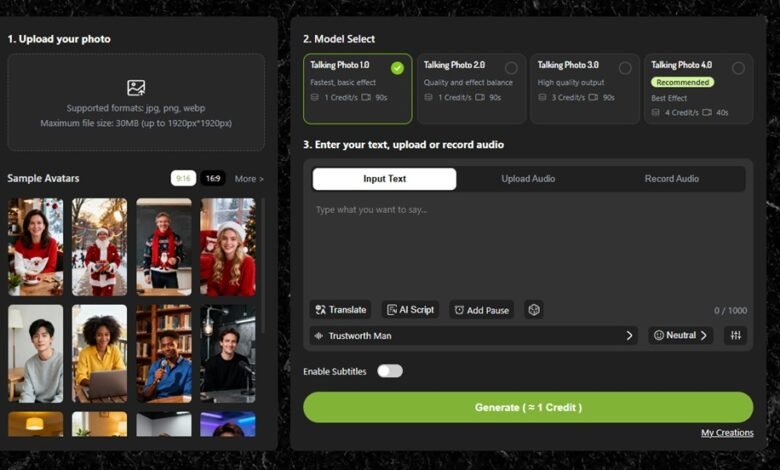
Platforms such as LipSync Video make this process accessible to everyday creators by automating these steps into a simple workflow.
With tools like the AI talking photo generator, a static portrait can be turned into a speaking video within minutes.
Real-World Use Cases for Talking Photo Content
The growing popularity of talking photos isn’t just driven by novelty. Creators and organizations are finding practical ways to use the technology.
Social Media Content Creation
Creators constantly need fresh video content. However, recording daily videos can be time-consuming.
Talking photos allow creators to:
- Animate character avatars
- Turn memes into speaking videos
- Create narrative storytelling posts
Some creators have reported producing 3–5 times more video content after integrating AI-generated talking photos into their workflow.
Educational and Historical Storytelling
Teachers and educators are using talking photos to bring historical figures to life.
Imagine a classroom lesson where a portrait of Shakespeare explains his own writing style, or a historical leader narrates an important event. The format makes educational content more immersive and memorable.
Digital Marketing Campaigns
Marketing teams often rely on visuals, but static images can struggle to capture attention.
Talking photos help brands create:
- Animated product ambassadors
- Story-driven advertisements
- Personalized marketing messages
Because the format combines visuals with speech, audiences often watch longer compared to image-based ads.
The Advantage of Talking Photo Content
Beyond creativity, talking photo videos can also improve content visibility online.
Search engines increasingly prioritize multimedia content, especially videos that keep users engaged longer on a page.
Higher Engagement Metrics
Video-based pages tend to achieve:
- Longer session durations
- Higher interaction rates
- Lower bounce rates
These behavioral signals can indirectly support stronger SEO performance.
Shareability Across Platforms
Talking photo videos are also easy to distribute across multiple platforms, including:
- YouTube Shorts
- TikTok
- Instagram Reels
- LinkedIn posts
The same animated photo can be repurposed into several formats, maximizing content reach without additional production work.
For creators who want to experiment with AI-powered video storytelling, platforms like LipSync Video provide tools designed specifically for generating realistic talking photo content.
Best Practices for Creating Realistic Talking Photos
While AI simplifies the process, the quality of a talking photo still depends on a few important factors.
Choose High-Quality Images
Clear facial features help AI detect expressions more accurately. Portrait photos with good lighting and a front-facing angle usually produce the best results.
Use Natural Audio
Voice recordings with consistent tone and clear pronunciation improve lip synchronization.
Some creators prefer using short sentences or scripts to maintain realism.
Keep Videos Short and Focused
Short videos—often between 10 and 30 seconds—perform best on social platforms. A concise message helps viewers stay engaged from start to finish.
The Future of Talking Photo Technology
AI-generated media is evolving rapidly. Talking photo technology is likely to become more advanced in several areas:
More expressive facial animation
Future models will capture subtle emotions such as sarcasm, excitement, or surprise.
Multilingual speech support
Creators will be able to generate talking photos that speak multiple languages with accurate lip synchronization.
Real-time generation
Instead of waiting for rendering, some platforms may soon produce animated photos instantly.
As these improvements emerge, talking photos could become a standard format for storytelling, marketing, and digital communication.
Conclusion
The transformation of static images into speaking visuals represents one of the most exciting developments in modern AI media tools.
A talking photo is more than just a novelty—it’s a new way to tell stories, capture attention, and communicate ideas through visual content.
For creators, educators, and marketers alike, the technology provides a simple yet powerful method to turn ordinary photos into engaging videos. As AI continues to advance, the line between static images and dynamic storytelling will only continue to blur.
And in a digital world where attention is the most valuable currency, giving photos a voice might just be the next big step in content creation.