9 Rules Every Collector Should Follow When Storing a Growing Watch Collection

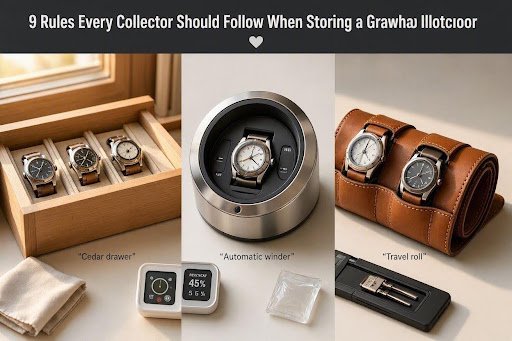
Buying your first serious watch is easy. Working out where to put your fifth, tenth, or twentieth one is where most collectors start making mistakes.
A single automatic watch is simple to look after. You wear it, you take it off, and if it stops, you wind it back up in thirty seconds. Once a collection grows past two or three pieces, though, the maths changes. Some watches need to keep running so their complications don’t reset. Others need protecting from dust, light, and humidity for months at a time. And leather straps, gold cases, and vintage dials all age differently depending on how they’re stored.
This guide walks through the practical rules for storing a growing watch collection properly, from the first extra piece to a display-worthy set of a dozen or more.
1. Separate “active” watches from “resting” watches
The first mistake most new collectors make is treating every watch the same way. In reality, a collection splits naturally into two groups.
Active watches are the ones you wear regularly, at least a few times a month. These just need a safe, dry, dust-free spot, ideally somewhere you’ll actually use rather than tucked away.
Resting watches are pieces you’re not wearing right now but still want ready to go. This is where most storage mistakes happen. Left in a drawer for months, an automatic watch simply stops, and its date, moonphase, or complications need resetting from scratch every time you pick it up.
Sorting your collection into these two categories first makes every other decision below much easier.
2. Invest in a proper watch box before you need one
A dedicated watch box does three things a drawer or dresser top can’t: it protects cases and crystals from scratches, keeps dust out of the caseback and crown, and stops straps from tangling or creasing.
Leather boxes are worth the investment once you have more than two or three watches. They’re generally lined with soft microsuede or velvet to prevent scuffing, and a well-made one will protect pieces for decades rather than years. Aevitas has built a reputation among collectors specifically around leather watch storage, so it’s worth browsing a proper collection before your watches end up living in a sock drawer.
The right box size depends on where your collection is headed, not just where it is today. Buying a six-slot box for four watches sounds sensible until you buy watch number seven.
3. Understand why automatic watches need winders
This is the rule that trips up most new collectors: automatic watches are powered by the natural motion of your wrist. No wrist, no motion, no power reserve. Within 24 to 48 hours, most automatics simply stop.
That’s fine for a simple three-hand watch. You just reset the time and date and carry on. It’s a different story for watches with a perpetual calendar, moonphase display, or a GMT complication set to a specific reference. Resetting those every time can be fiddly, and in some cases it should really be done by a watchmaker to avoid stressing the movement.
A watch winder solves this by gently rotating a resting watch to simulate wrist motion, keeping it wound and ready. Not every brand or movement needs the same rotation direction or number of turns per day, though, and getting this wrong can affect accuracy over time. If you’re building out a collection that includes Swiss automatics, it’s worth reading more on best watch winders for specific movements before buying one, since the settings genuinely do matter.
4. Keep humidity and temperature stable
Leather straps crack, metal bracelets can corrode, and lubricants inside a movement can thicken or dry out when conditions swing between damp and dry, or hot and cold.
A stable room, ideally somewhere between 40 and 50 percent relative humidity, is the practical target for most home collections. Bathrooms and kitchens are the two worst places to store watches in the house, simply because humidity spikes so quickly during a shower or while cooking. The National Association of Watch and Clock Collectors has published useful general guidance on humidity and climate control for timepieces, which is a good starting point if you’re storing anything genuinely valuable or vintage.
5. Keep watches out of direct sunlight
UV exposure fades dials, discolours certain lume compounds, and can even cause leather straps to dry out and crack faster than normal wear would. A watch box on a windowsill looks nice for a photo, but it’s one of the quicker ways to visibly age a collection.
If you like displaying your watches rather than keeping them in a closed box, position the display away from direct light, and rotate pieces out from time to time rather than leaving the same watch exposed for months on end.
6. Store leather straps separately when not in use
Leather straps behave differently to steel bracelets. They absorb moisture from skin and air, and they need to breathe. Sealing a leather-strapped watch in an airtight case for long periods can actually accelerate cracking rather than prevent it.
A well-ventilated leather watch box, rather than a sealed plastic case, tends to be the better long-term home for anything with a leather strap. It’s also worth wiping straps down occasionally and keeping them away from cosmetics, perfume, and sunscreen, all of which degrade leather faster than normal wear.
7. Match your winder settings to the movement, not the brand
Not all automatic movements are built the same way. Some wind in both directions, some only in one, and the ideal number of turns per day (TPD) varies depending on the calibre inside the case, not just the brand name on the dial.
This matters more than most new collectors expect. Using the wrong direction or turn count won’t damage a modern movement outright, but it can leave a watch under-wound, or in rarer cases, cause unnecessary wear over years of use. If Omega automatics are part of your collection, it’s worth checking specific TPD and direction settings before assuming a generic winder setting will do the job properly.
8. Plan storage capacity ahead of your collection, not behind it
Almost every collector underestimates how quickly a collection grows once it starts. What begins as “just one nice watch for special occasions” often turns into three, five, or more within a couple of years.
Buying storage with some spare capacity, rather than exactly matching your current watch count, saves you from re-buying boxes and winders every twelve months. It also means new pieces have a proper home from day one, rather than sitting in their original packaging while you decide where they’ll live.
9. Insure and document valuable pieces
This one isn’t glamorous, but it matters. Once a collection reaches a certain value, home contents insurance often won’t cover it fully, particularly for anything vintage or limited edition. Photographing each piece, keeping papers and boxes, and getting a proper valuation every few years is standard practice among serious collectors, and it makes replacing or repairing a watch far less stressful if something does go wrong.
Final Thoughts
Storing a watch collection well isn’t about spending as much as possible on accessories. It’s about matching the storage to how you actually use your watches: which ones you wear, which ones need to keep running, and which materials need protecting from light, humidity, and time.
Get the basics right, a proper box, sensible humidity control, and winders set up correctly for the movements you own, and a collection that took years to build will stay in excellent condition for decades to come.
FAQs
Do I need a watch winder if I only have two automatic watches? Not necessarily. If you wear both regularly enough that neither sits still for more than a day or two, manual winding by hand or simply resetting the time when needed is often enough. Winders become genuinely useful once you own watches with complications that are awkward to reset, or once pieces sit unworn for a week or more at a time.
How many watches justify buying a proper watch box? Most collectors find the switch worthwhile from around three or four watches onward, once a drawer or dish is no longer keeping straps untangled and cases scratch-free.
Can a watch winder overwind an automatic movement? No. Modern automatic movements have a slipping mainspring mechanism that prevents overwinding, whether you’re winding by hand or using a winder. The risk with winders is using the wrong direction or turn count for a specific movement, not overwinding itself.
Is it bad to store watches in a safe? Not at all, provided humidity is controlled inside it. Safes are excellent for security but can trap moisture more than an open room, so a small desiccant pack or humidity monitor inside is a sensible addition.
How often should leather watch straps be replaced? This depends heavily on how often the watch is worn and how it’s stored, but most leather straps show visible wear within one to three years of regular use. Storing watches properly when they’re resting, away from direct heat, light, and moisture, noticeably extends this.