You’re driving through Farnborough on a quiet Tuesday morning, radio low, and then, there it is. A noise you’ve never heard before. Your stomach drops. You turn the radio off. You wonder if it was there yesterday.
Most drivers have been in that exact moment. The good news is that most car noises have a clear cause. The better news is that catching them early almost always means a smaller repair bill. This guide breaks down the most common strange car noises, what they usually mean, and when you genuinely need to act.
Why You Should Never Ignore a New Car Noise
A new noise is your car’s way of flagging a problem before it gets worse. Many mechanical failures that end in a breakdown start with a warning sound that was dismissed for weeks. Ignore a squeal long enough and it becomes a grind. Ignore a grind and you’re looking at rotor and caliper damage on top of the original pad wear, a much bigger job than the one you started with.
The rule is simple: if a noise is new, persistent, or getting louder, it needs attention. Drivers in Fleet, Ash Vale, and across the Hampshire area often push on hoping the sound will sort itself out. It rarely does. According to GOV.UK guidance on vehicle condition and roadworthiness, your car must be in a roadworthy condition at all times, and a fault that affects braking, steering, or visibility can result in a fine or penalty points.
Common Car Noises and What They’re Telling You
1. Squealing or Grinding When You Brake
This is one of the most common noises drivers in Aldershot and Farnham report, and one of the most important to act on early.
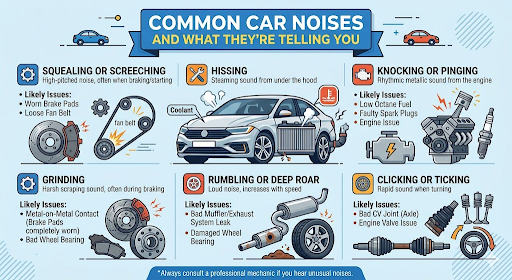
A high-pitched squeal when braking usually means the brake pad wear indicators are doing their job. They’re small metal tabs built into the pad that make contact with the rotor once the friction material runs low. It’s a warning, not an emergency, but one that needs addressing soon. A grinding sound is a different matter. That harsh, metallic noise means the pads have worn through entirely and the caliper or backing plate is making direct contact with the disc. Braking efficiency drops, and rotor damage follows quickly. This one should not wait.
2. Knocking or Tapping From the Engine
A knock from the engine tends to land differently, and rightly so. The most common causes are low engine oil, the wrong fuel grade, or worn internal components such as pistons or connecting rods. Low oil means less lubrication between moving parts, and that friction produces a characteristic knock or tap.
A light ticking on a cold start that fades within a minute or so is usually just oil warming up and circulating, normal behaviour. A knock that persists, deepens, or appears mid-drive is a different story entirely. If you notice this alongside a warning light on the dashboard, our guide on what to do when your engine management light comes on covers the next steps clearly.
3. Clicking When You Start the Car
A rapid series of clicks when you turn the key, but the engine doesn’t fire, is almost always a battery issue. Either the battery is flat, the terminals are corroded, or the battery no longer holds enough charge to power the starter motor. A single loud click, rather than a rapid succession, often points to the starter motor itself.
If the clicking happens while the engine is running and gets louder when oil is low, that’s worth separating from a cold-start battery click. Context matters. Note when the noise happens, on startup, while idling, or when turning, and share that with your mechanic. It narrows the diagnosis considerably.
4. A Humming or Droning That Gets Louder With Speed
This one is easy to dismiss at first because it can feel almost like road noise. But a hum or drone that increases steadily as you accelerate, particularly one that changes slightly when you steer gently left or right, usually points to a wheel bearing on its way out. Uneven tyre wear is another common cause, especially on older tyres or after a hard kerb impact.
In many cases, uneven or worn tyres are the root cause. If you notice this issue, it may be worth checking your tyres in Aldershot to ensure they are balanced, aligned, and safe for road use.
Drivers in Tongham and North Camp who cover a lot of motorway miles tend to notice this one during longer runs. If the noise shifts when you change lanes or gently change direction, have the wheel bearings checked promptly. A failed bearing can cause a wheel to lock or pull unexpectedly.
5. Rattling From Underneath
A rattle from under the car when driving over bumps, speed humps, or rough surfaces usually comes down to one of three things:
- A loose or broken exhaust bracket, allowing the exhaust to knock against the underside of the car
- A worn heat shield around the catalytic converter, which vibrates when loose
- A suspension component that has come free or worn through
The exhaust and heat shield are the most common culprits in older vehicles. Drivers in Ash and surrounding areas who cover a lot of town driving, with its inevitable speed bumps and potholes, tend to see these faults appear earlier than motorway drivers. A visual check from underneath will often reveal the problem immediately.
6. Squealing Under the Bonnet
A high-pitched squeal coming from under the bonnet, particularly on startup or when you accelerate, is almost always belt-related. The serpentine belt or fan belt drives key components including the alternator, power steering pump, and air conditioning compressor. When it begins to wear, loosen, or slip on its pulley, it produces a characteristic screech, one that tends to be worse on cold mornings.
This is not a noise to let run. A snapped serpentine belt can cause immediate loss of power steering and, depending on the engine, can lead to overheating. It is one of the more affordable fixes when caught early and one of the more disruptive ones when it fails entirely.
7. Clunking Over Bumps or When Turning
A clunk that appears every time you go over a pothole or speed bump, or when you turn at low speed, usually points to the suspension system. Worn shock absorbers, damaged ball joints, or loose anti-roll bar links are the most frequent causes. These components absorb road impact and keep your tyres in proper contact with the surface, when they fail, you feel it and hear it.
If the clunk is specifically tied to turning, louder on full lock or tight corners, it may be a CV joint issue. Our detailed guide on knocking noises when turning the steering wheel explains exactly what to look for and when it becomes urgent.
Noises That Mean Act Now: Not Tomorrow
Most car noises give you time to book a garage visit within a few days. A handful do not. If you hear any of the following, stop driving and arrange a check as soon as possible:
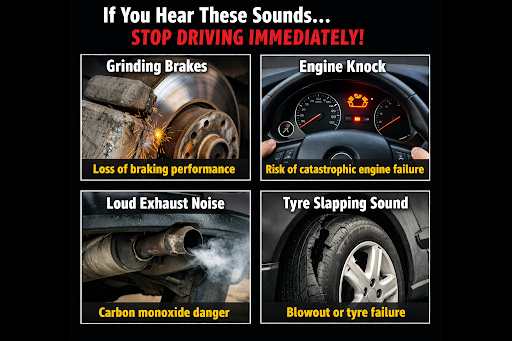
- Grinding brakes: loss of braking performance is a direct safety risk
- Deep engine knock mid-drive: continuing to drive risks catastrophic engine failure
- Loud roaring from underneath: a failed exhaust can allow carbon monoxide into the cabin
- Tyre slapping or flapping: a tyre about to fail or already failing structurally
These are not situations where waiting to see if it improves is a sensible option.
How to Describe a Car Noise to Your Mechanic
One of the most practical things you can do before a garage visit is prepare a clear description of the noise. Mechanics work faster, and diagnose more accurately, when the driver can give them specifics. Think about:
- When does it happen: on startup, while braking, when turning, only at speed?
- Where does it seem to come from: front, rear, underneath, under the bonnet?
- What does it sound like: grinding, clicking, humming, rattling, squealing?
- How often: constant, intermittent, only in cold weather?
A note on your phone with this information takes two minutes and can save a lot of back-and-forth at the garage.
Conclusion
Strange car noises rarely disappear on their own, but they almost always start small. Catching a squeal before it becomes a grind, or a tap before it becomes a knock, is the difference between a routine fix and a serious repair. Whether you’re driving regularly around Farnborough, commuting from Ash Vale, or heading out of Fleet on longer runs, your car’s sounds are worth listening to.
If something doesn’t sound right, getting it checked early can save you from expensive repairs later. Booking a professional car service in Aldershot with G Force Tyres ensures any unusual noises are diagnosed and fixed before they become serious issues.
Frequently Asked Questions
Is it safe to drive if my car is making a strange noise? It depends on the noise. A light squeal when braking in wet conditions is often harmless. Grinding, deep knocking, or loud roaring are not, these point to faults that affect safety directly. If in doubt, have it checked before driving further.
What does a grinding noise when braking usually mean? It almost always means the brake pads have worn through and metal is contacting the disc rotor directly. The longer it continues, the more likely the rotor will need replacing alongside the pads.
Why does my car click when I try to start it? A rapid succession of clicks usually means a flat or failing battery. A single loud click more often points to the starter motor. Neither will resolve without attention.
Can low oil cause strange engine noises? Yes. Low or dirty oil reduces lubrication between moving parts, producing ticking, tapping, or knocking sounds. Checking and topping up your oil is the first step, if the noise continues, a diagnostic check is the next.
Why does my car clunk every time it goes over a bump? This usually indicates worn suspension components, shock absorbers, ball joints, or anti-roll bar linkages are common causes. Suspension faults affect handling and tyre contact with the road, so they are worth addressing promptly.