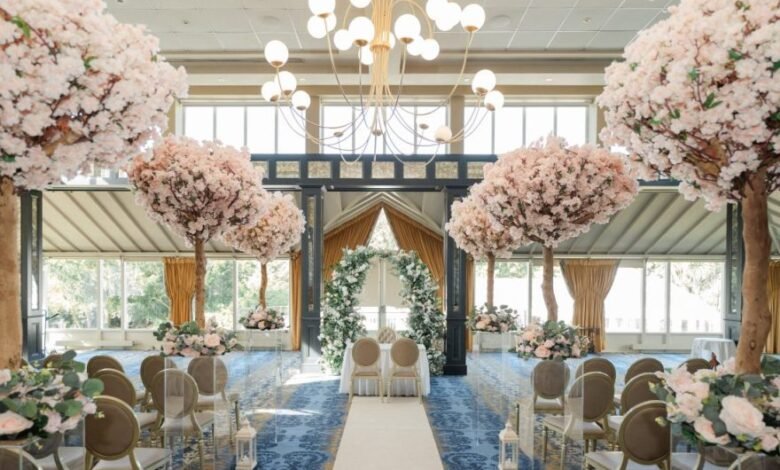
The most common mistake couples make when approaching wedding décor is starting with Pinterest boards rather than with themselves. Inspiration gathered from external sources is useful — but only once a couple has articulated, in their own words, what they actually want to feel on their wedding day. At that stage, https://wezoree.com/ can be a useful source — not as a place to copy ideas blindly, but as a way to explore styles once the direction already feels personal.
Understanding Your Wedding Vision: From Themes to Atmosphere
Start with atmosphere, not aesthetics. Your color palette, flowers, and table settings should flow naturally from the mood you want to create—not the other way around. A couple who imagines “an intimate dinner in an old house with people we love” will end up with a more cohesive look than one who simply picks “terracotta and dried flowers.” The real questions that matter:
- What does walking into your ceremony space feel like? Some couples want intimate and hushed; others want expansive and grand. The difference shapes everything that follows.
- Dinner is its own moment. Does it feel like a family meal, a garden party, or something more formal? This one detail influences lighting, table arrangements, even how you serve food.
- Think about sensory memory. What’s the one thing you want guests to remember? The scent of flowers, candlelight warming the room, the quality of the food—pick what actually matters to you.
- Finally, look at your venue honestly. What is it already telling the story? Work withthat, not against it.
This matters most. Don’t fight your space—work with it. That beautiful old stone farmhouse? Don’t turn it into a tropical resort. Just make it more itself. Better flowers, warmer light, nicer tables. Everything fits the story the place already tells.
Key Elements of Décor: Flowers, Lighting, and Table Settings
These three elements — florals, lighting, and table settings — account for the majority of the visual impact of any wedding. Understanding how each works, and how they work together, is the foundation of coherent wedding styling.
Florals
Flowers hit harder emotionally than anything else in a wedding—but they’re either wildly overspent or skimped on in ways that leave the room feeling empty. Here’s where flowers actually matter:
- Ceremony arch — this is the shot everyone takes. Every guest sees it, you see it in photos forever. Make it count.
- Entrance to dinner — first thing people notice about the room. Get this right and everything else feels intentional.
- Table centerpieces — your guests stare at these for hours. More flowers here usually means more impact than one fancy arrangement elsewhere.
- Your bouquet — shows up in every photo. Worth the splurge.
Skip the small stuff first: chair florals, place card accents, restroom arrangements, cocktail garnishes. Nice to have, not necessary.
Use what’s in season where you’re getting married. Seasonal flowers are cheaper, more beautiful, and easier to work with than chasing imported blooms. A late-summer Provençal wedding with dahlias and wild grasses costs less and looks better than forcing peonies out of season. According to Wezoree’s network, the smartest approaches right now are:
- Loose and abundant—garden-gathered, slightly wild rather than tightly structured
- Dried and preserved elements mixed with fresh: pampas, wheat — adds texture and longevity
- Architectural installations: floral arches and ceiling installations as room-defining structures rather than tabletop accents
- Monochromatic palettes within a single color family rather than multi-color arrangements
Lighting
Lighting is the most underrated thing you’ll spend money on—and it changes everything. Same space, same flowers, same tables. Warm candlelight versus overhead fixtures? Completely different wedding.The approach:
| Layer | What It Does | Examples |
| Ambient | Sets overall tone; replaces or supplements venue lighting | Bistro string lights, uplighting, and chandeliers |
| Task | Functional illumination for specific areas | Bar lighting, catering station lighting, and dance floor |
| Accent | Creates focal points and highlights specific elements | Candles, lanterns, and floral spotlighting |
Candles are your best investment. More candles at a lower cost beat almost anything else. Pillars, tapers, votives—quantity matters. A table with 12 candles at different heights feels more intimate and photographs better than two fancy centerpieces under harsh overhead lights.
Look at your venue’s existing light first. An old stone building with warm ambient light needs way less work than a modern industrial space with fluorescents. Build your lighting plan around what’s already there, not against it.
Table Settings
The table setting is the most intimate thing at your wedding. Guests look at it for two to three hours during dinner. They touch it and interact with it all evening. Here are the components of a table setting and their visual weight:
- Linens — this is your foundation. Your color and texture choice determines what works on top
- Tableware — plates, glasses, cutlery. Keep it consistent and of good quality
- Centerpieces — the focal point people look at. Heights should vary between tables. It makes the room feel alive
- Place settings — menu cards, place cards, small favors. Guests notice these first. Personal touches matter
- Candlelight — this ties it all together. It needs to be at every seat
For destination weddings, especially, high-quality tableware rental often produces better results than the venues’ standard house inventory. Vintage or specialty plate rental, distinctive glassware, and linen upgrades are typically the highest visual-return investment per dollar in the table setting category.
How Wezoree Professionals Curate Stunning Wedding Styles
Wezoree’s florists and wedding stylists start the same way every time. They look at the space. They talk to the couple. Trends come last, not first. What makes their work stand out isn’t following what’s popular. It’s that everything looks like it belongs together. The professional approach:
Step 1: Space Analysis
A professional stylist walks into the venue first. Before any mood board, they evaluate what’s actually there. The building’s age, what the walls and floors are made of, how the light comes in, and the size of the rooms. They understand the space completely and then figure out what to do. Not before.
Step 2: Couple Profiling
A stylist asks about their home, what they wear. Their reference points are in design, food, and travel. This conversation reveals what they actually like better than asking them to describe their wedding vision directly.0
Step 3: Palette Before Florals
The color palette is established before floral selection. This prevents the common problem of beautiful individual elements that don’t work together because they were selected in isolation.
Step 4: Scale Planning
A stylist thinks about how big things should actually be in the room. Something that looks perfect in a photo disappears in a huge reception hall. That same thing overwhelms a small dining room. You plan for the real space, not theory.
Step 5: Cohesion Audit
Before everything gets locked in, a stylist checks that all the pieces actually work together. The ceremony flowers need to match the table flowers. The linens need to work with the candlelight. What guests see when they walk in should prepare them for what’s inside the reception space.
Common Mistakes in Wedding Styling
Most styling failures happen because couples chase trends that don’t fit, fight their venue, pick pieces that don’t go together, or book too late. Here’s what to avoid:
- Trend adoption without context. The most photographed trend works because it fits a specific venue, palette, and couple. When you move it to a different space, it fails because those things aren’t there anymore. Before you take a trend, check if it actually fits your venue, palette, and season.
- Décor that fights the venue. When you force design elements that don’t match the space, it never works. A huge maximalist floral installation in a minimalist room looks wrong. The venue has its own character. Work with that, not against it.
- Disconnected elements. The biggest mistake is beautiful pieces that don’t go together. A lush garden arch for the ceremony, then sleek black-and-white tables in the reception. It’s jarring. Everything needs to feel like it belongs in the same wedding.
- Over-investing in photography-only moments. Elaborate chair backs and complex escort card displays look great in photos but guests barely notice them in person. Exceptional lighting and quality linens feel amazing to guests but photograph less dramatically. Balance what guests experience with what photographs well.
- Ignoring daytime and evening transitions. Décor that looks gorgeous in afternoon light feels flat under artificial evening light. Evaluate your styling across both conditions, especially when the ceremony is outdoors and the reception is indoors.
- Late florals booking. Premium florists in Italy, France, and Greece book up 9–12 months ahead for peak season. Late booking means you get whoever’s available, not who’s actually best for your wedding.
Tips for a Cohesive Wedding Aesthetic
Cohesion doesn’t happen by accident. It comes from clear decisions made early and shared with everyone involved. Here’s what actually works:
| Tip | What to Do |
| Three-color rule | Dominant (60%), secondary (30%), accent (10%). More creates chaos, less feels flat |
| Texture over color | Use different textures in one color family. More sophisticated than mixing colors |
| Let the venue work | Don’t cover strong architecture. Add to it, don’t transform it |
| Set hierarchy | Pick three priority moments. Budget goes there first. Everything else follows |
| Brief all vendors | Share full palette with florist, linen, caterer, lighting. Everyone needs context |
| Evaluate in space | Don’t decide from photos. See it in the actual venue under actual light |
Incorporating Personal Touches While Staying on Trend
Trends provide the visual language and tell you what’s resonant right now. Personal touches fill that language with meaning that’s specific to you. You’re not choosing between them — you’re combining them. The trend gives you the framework; your personal story fills it. Here’s what actually works in any aesthetic:
- Locally sourced details that mean something — if a place matters to the couple, small elements from it can become part of the wedding in a natural way — like Portuguese ceramic tiles for a couple who met while traveling in Portugal.
- Personal objects in the décor — vintage books, inherited textiles, or framed family photographs can bring much more character than generic styling pieces.
- Food and drinks with a real connection — a signature drink, a cake flavor tied to a shared memory, or wine from a meaningful place often stay with guests longer than expected.
- A ceremony spot with significance — the exact place within the venue also matters. A ceremony under an old tree, in the garden, or by the water can say more about the couple than décor ever could.
The difference between trend-driven and timeless details matters. Trends can date a wedding quickly, while elements like candlelight, good linen, balanced styling, and personal objects tend to last much better visually. The strongest wedding design usually builds on those lasting choices and uses trends only in small touches.
The difference between wedding décor that photographs well and décor that actually feels right comes down to one thing — a professional who knows your couple, your venue, and your destination.
Wezoree’s florist and planner profiles show you more than portfolio images. You see how they think through interviews, their track record in specific venues through Real Weddings, and what previous clients say about working with them.
The couples with the best weddings invest early in the right professionals. They brief them thoroughly on their vision and venue. Then they trust the work instead of trying to control every detail. Beautiful styling isn’t about having the right trends. It’s about having the right person making hundreds of small decisions that add up to something cohesive. That expertise is real, measurable, findable, and finding it is how you get a wedding that looks and feels exactly as it should.