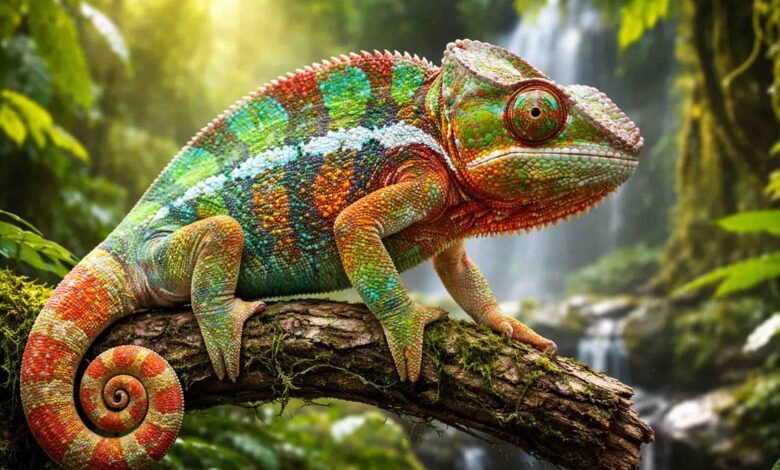
Chameleons have always amazed people. They can change colors, move their eyes in different directions, and catch insects with a fast tongue. These special skills make them feel like magical animals. Many people do not know how they work, but they want to learn more because these reptiles are so unique.
The word Chameleónovité is a simple way to describe the whole chameleon family. It is used in some European languages, but it means the same thing everywhere — a group of reptiles known for color change and climbing. When we talk about Chameleónovité, we talk about every type of chameleon in the world.
In this article, we will explore what makes Chameleónovité so special. We will look at their history, types, body skills, and how they change color. We will also learn about their homes, their behavior, and their hunting style.
What Are Chameleónovité?
Chameleónovité is the name used for the chameleon family. It includes more than 200 species of chameleons. These animals belong to the reptile group, and they come from the order called Squamata, which also includes lizards and snakes. Even though they are reptiles, chameleons have many skills that most other reptiles do not have.
The most famous thing about Chameleónovité is their color-changing skin. They can change from bright colors to dark shades in just a moment. They also have special feet that help them grip branches, and a long tongue that moves extremely fast when catching food. These features make Chameleónovité very different from other reptiles around the world.
When people learn about Chameleónovité, they are often surprised by how many species there actually are. Some are very small, and some are large. Some have horns, while others have smooth heads. Even though they look different, they all belong to the same family because of their shared traits.
The Story of Chameleónovité
The story of Chameleónovité goes back millions of years. Scientists found early chameleon fossils in places like Africa and Europe. These fossils show that chameleons already had some of their special features long ago, such as gripping feet and long tails. This means chameleons developed their skills early in their history.
As time passed, Chameleónovité spread to new places. One of the most important locations was Madagascar. When chameleons reached Madagascar, they evolved into many new species. Today, Madagascar has more chameleons than any other place in the world. The island helped them grow and adapt in different ways.
Chameleons also spread across mainland Africa and some parts of Europe and Asia. As they moved into new environments, they changed slowly over time to fit those places. This is why some chameleons live in rainforests, while others live in dry areas. Their story is an example of how animals adjust and survive.
Types of Chameleónovité
1. Chamaeleo
Chamaeleo is one of the most well-known groups within Chameleónovité. These chameleons live mostly in Africa and southern Europe. They often have a tall head shape called a “casque,” which makes them easy to recognize. Many people who keep chameleons as pets choose species from this group because they are strong and colorful.
These chameleons like open forests and warm places. They have bright skin and long bodies, and they can change color very quickly. Their size can be medium to large, depending on the species. They are known for their calm style of climbing and their steady way of hunting.
2. Furcifer
Furcifer chameleons are mostly found in Madagascar. They are famous for their bright colors and eye-catching patterns. The Panther Chameleon is part of this group, and it is one of the most colorful chameleons in the world. Their colors can change based on mood, temperature, or light.
Furcifer species often live in humid forests. They like places with many branches and leaves. They need cover to hide from predators and to rest safely. Because of their strong colors, these chameleons are popular in reptile shows and nature documentaries.
3. Trioceros
Trioceros chameleons come mostly from Africa. They often have horns or raised ridges on their heads. These horns are used for display, especially among males who want to show strength. Trioceros chameleons live in cooler forest areas and mountain regions.
Their bodies are usually sturdy, and they climb very well. They prefer quiet spaces and do not like too much disturbance. Their colors are not always as bright as Furcifer, but they still show strong patterns when needed.
4. Brookesia
Brookesia chameleons are also known as dwarf chameleons or leaf chameleons. They are extremely small, sometimes only a few centimeters long. One species, Brookesia nana, is one of the smallest reptiles ever found. These tiny chameleons live on the forest floor among leaves.
Because of their small size, they do not climb trees like other chameleons. Instead, they hide in leaf litter and small plants. Their colors blend perfectly with the ground, which protects them from danger. They show how diverse and surprising Chameleónovité can be.
5. Calumma
Calumma chameleons also live in Madagascar. They prefer moist forests with cool air and tall trees. Many of them have unique shapes on their faces, such as strange nose structures or bumps. These help them communicate and find mates.
Their colors are usually softer and more gentle compared to Panther Chameleons. They are very sensitive to changes in their environment. Because of deforestation in Madagascar, many Calumma species are now at risk.
How Chameleónovité Change Color
Chameleónovité can change their skin color using special cells under their skin. These cells are called chromatophores and iridophores. They hold pigments and tiny crystals that control how light reflects from the skin. When these cells move or expand, the colors change instantly.
Color change helps chameleons in many ways. They may change color when they feel hot or cold, so their body temperature stays balanced. They also change color when they feel scared or excited. For example, a male may show bright colors to impress a female or warn another male to stay away.
Some people believe chameleons change color only to hide, but that is not true. Camouflage is only one of the reasons. The main reason is communication. Their skin works like a message board, and other chameleons understand these color signals clearly.
Special Body Skills of Chameleónovité
One amazing skill of Chameleónovité is their eye movement. Each eye can move on its own, so a chameleon can look in two directions at the same time. This helps them stay safe and find insects easily. When they find prey, both eyes focus together for perfect aim.
Another special skill is their tongue. Their tongue can stretch longer than their body and move faster than you can blink. It shoots out quickly, sticks to the insect, and pulls it back in. This makes chameleons excellent hunters, even though they move slowly.
Their feet are also unique. The toes are grouped in a way that works like a clamp. This helps them grip branches tightly. Their tail is strong and can wrap around branches like a fifth hand. These skills make Chameleónovité perfect for life in trees.
Where Chameleónovité Live
Chameleónovité live in many parts of the world. The largest number of species live in Madagascar. Many others live across Africa, and a few live in parts of southern Europe and Asia. Their homes depend on their species and the type of climate they need.
Some chameleons prefer wet rainforests with thick plants. Others live in forests on mountains, where the air is cool. Some species even live in dry savannas or semi-desert areas. Each species has adapted to the temperature, humidity, and plants around them.
Their homes are very important to their survival. They need places with safe branches, enough insects, and proper sunlight. When their homes are destroyed, many species cannot survive. This is why forests and natural areas need protection.
How Chameleónovité Behave
Most Chameleónovité like to live alone. They do not stay in groups. They only look for other chameleons when it is time to mate. Because they live alone, they use color and body signals to communicate. Bright colors can show anger or interest, while dark colors can show fear or stress.
Chameleons move slowly and gently. They often rock back and forth as they walk. This makes them look like a leaf moving in the wind. It helps them stay hidden from predators and prevents insects from noticing them.
Males can be very territorial. If another male comes too close, they may change color, hiss, or swing their bodies to look bigger. These behaviors usually stop fights before they actually begin. Chameleons prefer to avoid physical conflict.
How Chameleónovité Hunt
Chameleónovité are patient hunters. They do not chase their prey. Instead, they stay still on a branch and wait. Their eyes look in different directions until they find a moving insect. Once they find one, both eyes focus to measure the distance exactly.
Their tongue is their main hunting tool. It shoots out quickly and sticks to the insect. The insect is pulled back into the mouth within a second. This fast movement gives the chameleon a big advantage, even if the insect tries to jump away.
They eat many types of insects, such as flies, beetles, crickets, and grasshoppers. Larger species sometimes eat small birds or lizards. Hunting happens throughout the day, depending on the species and the weather.
Life Cycle of Chameleónovité
Chameleónovité have an interesting life cycle. During mating season, males show bright colors to attract females. They approach carefully because females will reject males if they are not ready. Color is the main way chameleons communicate during this time.
Most chameleons lay eggs. The female digs a small hole in the ground, lays the eggs, and covers them. A single clutch may have between 10 and 80 eggs. Some species do not lay eggs at all. They give birth to live young, especially species that live in cooler places.
Baby chameleons are fully independent from the moment they hatch or are born. They must hunt on their own and stay safe from predators. Their growth depends on food, sunlight, and temperature. Smaller species live only a few years, while larger ones can live up to ten years.
Role of Chameleónovité in Nature
Chameleónovité play an important role in nature because they help control insect numbers. They eat many insects every day, which helps keep the environment balanced. If there were no chameleons, insects might grow too quickly and cause problems for plants and other animals.
Chameleons are also part of the food chain. Birds, snakes, and some mammals hunt them. This means chameleons help support the diets of many other animals. Every small creature has a place in nature, and Chameleónovité are no different.
Another helpful thing about chameleons is that they act like “warning signs.” When their population drops, it often means the environment is changing or getting damaged. Scientists watch Chameleónovité to understand how healthy a forest or a habitat is. Their wellbeing can show if the ecosystem is safe or in danger.
Problems Chameleónovité Face Today
Sadly, many Chameleónovité face serious problems today. Their habitats are being destroyed because forests are cut down for farming or building. When their trees disappear, chameleons lose their homes, food, and hiding spots. This makes it hard for them to survive.
Another problem is climate change. When temperatures rise or rainfall patterns change, chameleons struggle to adjust. They are sensitive animals, so even small climate changes can affect their health or ability to find food. Some species cannot survive if their environment shifts too much.
The illegal pet trade also harms many Chameleónovité. Some people take chameleons from the wild and sell them. This causes the wild population to shrink quickly. Many chameleons do not survive the long journey or the stress of being removed from their homes. These issues put many species at risk of extinction.
Chameleónovité as Pets
Chameleónovité are beautiful animals, and many people want to keep them as pets. Popular pet species include the Veiled Chameleon and the Panther Chameleon. These species are colorful and easy to find from good breeders. But even these chameleons need special care.
Chameleons are not good pets for beginners. They get stressed easily and prefer to be left alone. They do not like being handled too much. They need quiet spaces and stable conditions. A small mistake with care can make them sick quickly. This is why caring for Chameleónovité is more challenging than caring for many other reptiles.
Ethics are also important. Buyers should choose chameleons that are born in captivity, not taken from the wild. Wild-caught chameleons suffer a lot during capture and transportation. Buying captive-bred pets helps protect wild populations and keeps Chameleónovité safe in their natural habitats.
How to Care for Chameleónovité
Caring for Chameleónovité requires a proper setup. They need a tall terrarium with plenty of climbing branches and leaves. Chameleons love height, so the enclosure must be vertical. Good airflow is also important because they do not do well in closed glass tanks with poor ventilation.
Temperature and lighting are two key things for their health. They need UVB light to build strong bones and avoid diseases. They also need a warm area and a cooler area inside the enclosure so they can control their body temperature. Mist or fog should be used to keep humidity at the right level.
Feeding chameleons is another important part of their care. They eat live insects like crickets, roaches, and worms. These insects must be dusted with calcium and vitamins so the chameleon stays healthy. Chameleons do not drink from bowls, so owners must provide water through misting or drip systems.
How to Help Protect Chameleónovité
There are many ways people can help protect Chameleónovité. One simple step is supporting conservation groups that work to save forests and wild areas. Many chameleon species depend on protected habitats, especially in places like Madagascar. Donations and awareness help these groups continue their work.
Another way to help is by making good choices when buying pets. People should choose captive-bred chameleons from trusted breeders. Avoiding wild-caught chameleons reduces pressure on natural population. This helps wild Chameleónovité grow and recover.
People can also raise awareness. Sharing information about chameleons, their beauty, and their challenges can inspire others to care. When more people understand the problems chameleons face, the world becomes safer for these unique reptiles.
Fun Facts About Chameleónovité
Chameleónovité have many fun and surprising facts. One tiny species, Brookesia nana, is one of the smallest reptiles ever found. It is so small that it can sit comfortably on a fingertip. In contrast, some large species can grow over 60 centimeters long, tail included.
Their tongue power is amazing. A chameleon’s tongue can move faster than a sports car. It can go from zero to top speed in a split second. This helps them catch insects before the insects even know what happened.
Another fun fact is about their vision. Chameleónovité can see colors we cannot see, including ultraviolet light. This helps them communicate in special ways. Their skin and eyes work together to create a world full of signals we are only beginning to understand.
Final Thoughts
Chameleónovité are truly one of nature’s most special reptiles. Their color-changing skin, slow steps, quick tongue, and gentle style make them unforgettable. They show how creative nature can be and how every animal plays an important role in the world.
But even though they are amazing, many species are in danger. Protecting their forests, stopping illegal trade, and supporting conservation can help keep them safe. These small actions make a big difference for the future of Chameleónovité.
By learning about them, sharing their story, and caring for their habitats, we help these wonderful reptiles continue to live and shine. Chameleons remind us of the beauty of change, the value of nature, and the need to protect every living creature.
FAQs
Why can Chameleónovité change color?
They change color to communicate, control body heat, show mood, and sometimes blend in. Their skin has special cells that help them switch colors instantly.
Where do Chameleónovité live in the wild?
Most species live in Madagascar and Africa, but some are also found in southern Europe, the Middle East, and parts of Asia. They live in forests, mountains, and even dry areas.
What do Chameleónovité eat?
They eat insects like crickets, flies, beetles, and grasshoppers. Larger species may also eat small birds or lizards.
How long do Chameleónovité live?
Small chameleons live around 2–5 years. Larger species can live 5–10 years with good care.
Are Chameleónovité good pets for beginners?
No. They need special care, correct temperature, humidity, UVB light, and live insects. They get stressed easily, so they are better for experienced reptile keepers.
People Also Read:
Inflatom: The Future of Smart Inflation and Digital Growth
Buutman Uncovered: The Digital Persona Taking Over Online Culture
Ronenia: The Secret Land of Stories, Culture, and Imagination