The Backlash Against AI Content Farms: Why Internet Users Want Real Creativity Back

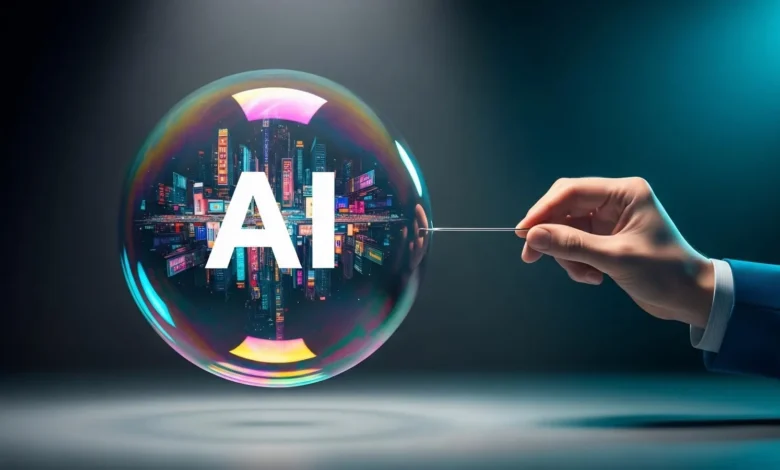
Artificial intelligence has made publishing easier than at any other point in the history of the web. A single tool can now produce blog posts, captions, product descriptions, images, and even video scripts in minutes. For brands and publishers, that speed is tempting. It cuts costs, speeds up production, and makes scale feel effortless. But the same convenience has also created a serious quality problem: too much content online now feels mass-produced, emotionally flat, and forgettable. Recent consumer research reflects that shift in mood. Deloitte found that half of respondents were more skeptical about the accuracy and reliability of online information than they were a year earlier, and among people familiar with generative AI, 70% said AI-generated content makes it harder to trust what they see online.
That frustration helps explain why phrases like Your AI Slop Bores Me are spreading so quickly. The complaint is not really about software existing. It is about the growing feeling that the internet is being flooded with content that says plenty without meaning much. When readers feel like every article sounds interchangeable, the problem stops being technical and starts becoming cultural.
Why So Much AI Content Feels Empty
AI can be useful as a support tool, but many publishers are not using it that way. They are using it to generate pages at scale with minimal editing, minimal expertise, and minimal original thinking. The result is writing that is clean on the surface but strangely lifeless underneath.
You can usually spot it after a few paragraphs. The wording is polished, but the sentences feel overly safe. The structure is predictable. The examples are vague. The voice never quite sounds like a person with something at stake. Instead of insight, readers get recycled phrasing and broad summaries dressed up as authority.
That matters more than some marketers assume. A study from the Nuremberg Institute for Market Decisions found that trust in AI itself was very low, with only 20% of respondents saying they trust AI, while 21% said they trust AI companies and their promises. The same research also found that labeling identical ads as AI-generated made audiences judge them more critically and engage with them less.
Tools like AI assistants and modern content editors, such as wysiwyg editor, can support better workflows, but they still depend on human judgment to produce content that feels meaningful and original.
“AI Slop” Became Popular Because It Solves a Naming Problem
People needed a fast, blunt way to describe low-value machine-made content, and “AI slop” did that perfectly. The phrase usually refers to articles, images, or posts that feel generic, rushed, repetitive, or creatively hollow. It does not always mean the content is factually wrong. Often, it means the content is technically readable but offers no original perspective.
That distinction is important. Readers are not only reacting to accuracy. They are reacting to sameness. They are reacting to the feeling that too much of the internet is becoming a copy of a copy of a copy.
Google’s own search documentation shows why this backlash is becoming harder for publishers to ignore. In March 2024, Google said it was strengthening its policies against “scaled content abuse,” including large amounts of unoriginal pages created mainly to manipulate search rankings rather than help users. Google also said its 2024 search updates were expected to reduce low-quality, unoriginal content in results by 40%, and later reported seeing 45% less of that type of content in search results after rollout.
This Is Bigger Than a Meme
At first glance, the anti-slop conversation can look like just another internet joke. People post screenshots, make sarcastic comments, and mock robotic writing styles. But underneath the humor is a serious concern: users increasingly feel that scale is being valued over substance.
That concern is reasonable. When publishers produce hundreds of thin pages just to capture traffic, readers lose confidence not only in those sites, but in the broader online environment. Deloitte’s 2024 survey also found that 59% of respondents familiar with generative AI struggle to distinguish between human-made and AI-made content, while 84% support mandatory labeling of AI-generated material. That tells you the trust problem is no longer niche. It is becoming mainstream.
Why Human-Made Content Still Stands Out
Human writing still has an advantage that mass automation cannot reliably imitate: lived perspective. A real writer brings judgment, taste, memory, humor, irritation, contradiction, and selective emphasis. Even when the prose is not perfect, those qualities make it feel alive.
That is why readers still pause for content that sounds intentional rather than assembled. They remember sharp observations, specific examples, and a voice that feels tied to experience. They are far less likely to remember generic filler, even when it is grammatically flawless.
This is also why communities built around the issue are gaining traction. Sites such as Your AI Slop Bores Me give people a place to react to this growing sameness instead of passively accepting it. The main site highlights the broader conversation around originality and low-value automation, while the vote page makes that critique participatory by letting users weigh in directly on examples. In other words, people are no longer just complaining about bad content. They are building spaces around defending better standards.
Online Communities Are Turning Criticism Into Culture
One reason this issue keeps growing is that it has become interactive. People are not only writing essays about AI slop; they are discussing it in communities, sharing examples, and turning the critique into a cultural signal. That is part of what makes the conversation durable.
It also helps explain why lighter formats matter too. The topic is not confined to think pieces and comment threads anymore. It is now showing up in playful formats like AI slop games, which reflect how deeply the issue has entered internet culture. When a criticism becomes a game, a meme, and a discussion space at the same time, it usually means the frustration behind it is real.
The Future of the Web Depends on Whether Quality Still Wins
AI-generated content is not going away. The real question is whether publishers will use AI as an assistant or as a substitute for judgment. Those are very different strategies, and readers can feel the difference.
If creators use AI to brainstorm, organize research, or improve workflow, it can support stronger work. But if they use it to publish endless pages with no real editorial care, they will keep feeding the backlash. Search platforms are already responding to that risk, and consumers are clearly becoming more skeptical too.
The web does not need less technology. It needs more standards. It needs more editing, more point of view, more accountability, and more material that feels worth a person’s time. That is why the backlash against AI content farms is gaining momentum. People are not asking for perfection. They are asking for something that feels real.
Conclusion
The rejection of low-effort AI content reflects a broader demand for originality online. Readers still want useful information, but they also want voice, judgment, and evidence that a human being actually cared about what was published. As more automated content floods search results and social feeds, that demand is only becoming clearer.
That is what gives the anti-slop movement its staying power. It is not just anti-AI. It is pro-quality. And as long as the internet keeps rewarding volume over value, more users will keep pushing back, keep sharing examples, and keep using spaces like Your AI Slop Bores Me and the vote page to make their point.