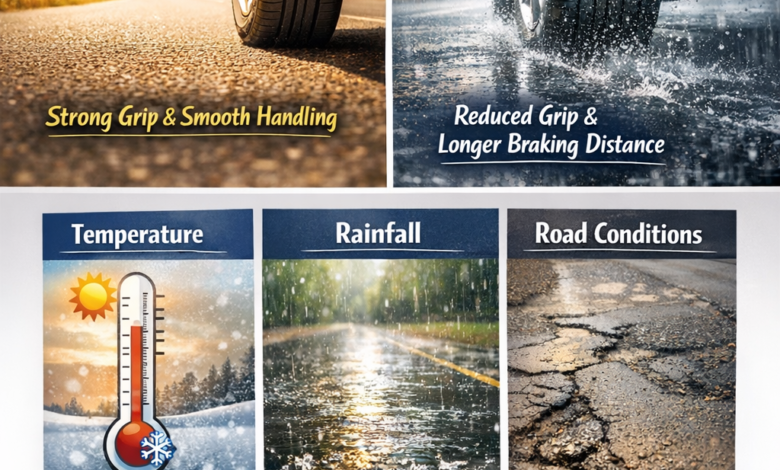
Most drivers only think about their tyres when something goes wrong, such as a puncture, a warning light, or a sudden loss of grip. But in reality, your tyres are constantly reacting to changing weather conditions every time you drive, often without you noticing.
Temperature, rainfall, and road surface conditions all change how your tyres grip, brake, and handle. A tyre that performs well on a dry summer road in Farnham may behave very differently on a cold, and wet morning. Understanding that relationship is one of the simplest ways to become a safer driver all year round. If you’re unsure how your tyres are performing in different conditions, visiting a trusted tyre shop in Fleet, Hampshire can help you identify issues early and stay safe on the road.
Wet Weather: The Biggest Risk on UK Roads
Rain is the most common hazard for drivers across Hampshire, and it is also the condition that exposes tyre problems fastest. Wet roads reduce friction between your tyre and the road surface, which directly increases the distance you need to stop safely.
According to GOV.UK stopping distance guidance, stopping distances in wet conditions can be at least double those on a dry road. That figure assumes your tyres are in good condition. Worn or underinflated tyres make that gap even wider.
Studies show that tyres at 1.6mm tread depth can take up to 40% longer to stop on wet roads compared to new tyres.
How Rain Reduces Grip
When it rains, a thin film of water forms between your tyre and the road. Your tyre’s tread channels are designed to disperse that water quickly, pushing it away from the contact patch so rubber can grip the surface beneath. The deeper and cleaner those channels are, the more effectively water is expelled.
As tread wears down, that dispersal becomes less efficient. On a wet road in Fleet or Farnborough, a tyre with low tread struggles to shed water fast enough, and grip suffers as a result.
Aquaplaning: What It Is and How to Avoid It
Aquaplaning happens when your tyre cannot clear water quickly enough and begins to ride on top of it rather than through it. At that point, you lose contact with the road entirely, steering, braking, and acceleration all become ineffective until the tyre reconnects with the surface.
It can happen in an instant, particularly at higher speeds or in standing water. Here is how to reduce the risk:
- Keep tread depth well above the legal minimum of 1.6mm, 3mm or more is far safer in wet conditions.
- Reduce speed in heavy rain, especially on unfamiliar roads.
- Avoid sudden steering inputs or hard braking if you feel the car begin to float.
- Check tyre pressure regularly, underinflated tyres are more prone to aquaplaning.
- Steer clear of standing water where possible, particularly on rural roads around Tongham and Ash Vale where drainage can be poor.
Cold Weather and What It Does to Your Tyres
Tyre Pressure Drops in the Cold
For every 10°C drop in temperature, tyre pressure falls by roughly 1 to 2 PSI. That might not sound significant, but underinflated tyres handle poorly, wear unevenly, and reduce fuel efficiency. Drivers across North Camp and Ash often notice increased fuel consumption in winter without realising their tyres are the likely culprit.
Check your tyre pressure when temperatures drop, and always check when tyres are cold, before a long journey rather than after.
Rubber Compound Performance Below 7°C
Standard summer tyres are engineered for warm road surfaces. As temperatures fall below 7°C, the rubber compound begins to harden, which reduces flexibility and grip. This is not a gradual process, it happens relatively quickly once that threshold is crossed.
All-season tyres use a different compound that stays more pliable in lower temperatures, which is why they are increasingly popular with drivers who want year-round performance without switching between tyre sets.
Hot Weather: An Overlooked Hazard
Summer heat is less discussed but equally important. As ambient temperature rises, so does the air pressure inside your tyres, hot air expands. If your tyres are already inflated to the upper end of the recommended range, this can push pressure to levels that affect handling and, in extreme cases, increase blowout risk.
Hot tarmac also accelerates tyre wear. On long motorway runs during a heatwave, the combination of friction and surface temperature puts additional stress on the rubber. Drivers heading out of Farnham on extended summer journeys should check pressure before setting off, and resist the temptation to release air from a hot tyre, as pressure will normalise once it cools.
All-Season Tyres: Do They Work in UK Conditions?
This is one of the most common questions drivers ask, and the honest answer is: for most people in this part of Hampshire, yes, with some caveats.
The UK rarely sees the extreme snowfall that demands dedicated winter tyres. What it does see is a long stretch of cold, wet, unpredictable weather from October through to March. All-season tyres handle that well. They offer better cold-weather grip than summer tyres and perform acceptably in light snow.
Where they fall short is at the extremes, deep snow, ice, or very high summer temperatures. If your driving is mostly local and year-round, an all-season set is a practical and cost-effective choice. If you regularly drive in more demanding conditions, dedicated seasonal tyres remain the stronger option.
What Tread Depth Has to Do With It
Tread depth is the single most important tyre variable when weather conditions deteriorate. The legal minimum in the UK is 1.6mm across the central three-quarters of the tyre. But research consistently shows that wet-weather performance begins to degrade noticeably below 3mm.
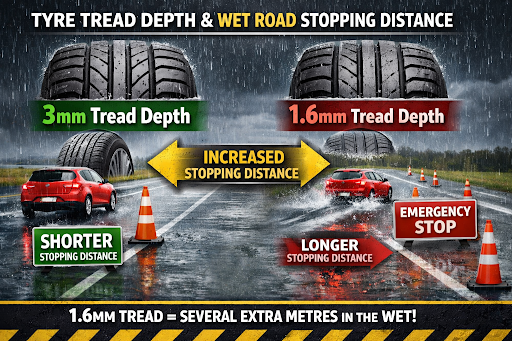
At 1.6mm on a wet road, stopping distances increase significantly compared to a tyre at 3mm. That difference, in an emergency, could mean several extra metres, enough to matter enormously.
Before winter sets in, it is worth having your tyres inspected properly. A full car service will include a tyre check as standard, covering tread depth, pressure, and visible damage, all of which become more critical as driving conditions worsen.
Tyre Performance vs Tread Depth (Wet Conditions)
| Tread Depth | Performance Level | Stopping Distance |
| 8mm (New) | Excellent grip | Shortest |
| 5mm | Good performance | Slight increase |
| 3mm | Reduced grip | Noticeably longer |
| 1.6mm (Legal Limit) | Poor wet grip | Significantly longer |
Seasonal Checks Every Driver Should Make
Weather changes year-round, and your tyres need to keep up. Rather than waiting for a problem to appear, build a simple seasonal habit around these checks:
- Tread depth: use a 20p coin as a rough guide. If the outer band of the coin is visible when inserted into the tread groove, your depth may be approaching the legal limit.
- Tyre pressure: check monthly and before long journeys, always when cold.
- Visual inspection: look for cracks, bulges, or uneven wear patterns along the sidewall and tread surface.
- Age: tyres older than five years should be inspected by a professional, regardless of tread depth. Rubber degrades over time even with low mileage.
If you want a quick and reliable tyre check before weather conditions change, you can also check reviews or get directions via TJ Services Fleet to see how local drivers maintain their tyres year-round.
Tyre Safety Checklist
| Check | Why It Matters |
| Tread depth | Maintains grip in wet conditions |
| Tyre pressure | Improves handling & fuel efficiency |
| Visual damage | Prevents blowouts |
| Tyre age | Avoids hidden rubber degradation |
Keeping Your Tyres Road-Ready All Year
Weather in this part of Hampshire can shift quickly, a dry morning in Farnborough can become a wet, cold afternoon by the time you are heading home. Your tyres are the only part of your vehicle in direct contact with the road, and they need to be ready for whatever conditions arrive.
The good news is that tyre safety is straightforward to maintain. Regular checks, appropriate inflation, and timely replacement when tread wears low are all it takes to keep your grip strong and your stopping distances short, whatever the season brings.
Frequently Asked Questions
How does rain affect tyre performance?
Rain reduces friction between the tyre and road, increasing stopping distances and the risk of aquaplaning. Tyres with good tread depth manage water dispersal effectively; worn tyres do not.
Does cold weather affect tyre pressure?
Yes. Pressure drops by roughly 1 to 2 PSI for every 10°C fall in temperature. Check pressure regularly during winter months to maintain safe handling.
What is aquaplaning and how do I avoid it?
Aquaplaning occurs when a tyre rides on a film of water rather than gripping the road beneath it. Maintaining adequate tread depth, correct pressure, and reduced speed in wet conditions are the best preventive measures.
Are all-season tyres suitable for UK winters?
For most drivers in Hampshire, yes. They offer better cold-weather performance than summer tyres and handle the UK’s typical wet, cold winters well. Dedicated winter tyres offer an advantage only in severe snow or ice.
At what tread depth do tyres become unsafe in wet weather?
The legal minimum is 1.6mm, but performance in wet conditions begins to decline noticeably below 3mm. Replacing tyres at 3mm is the safer and more widely recommended threshold.
How does heat affect tyres?
Hot weather increases internal tyre pressure and accelerates rubber wear. Check pressure before summer journeys and avoid driving on overinflated tyres in high temperatures.