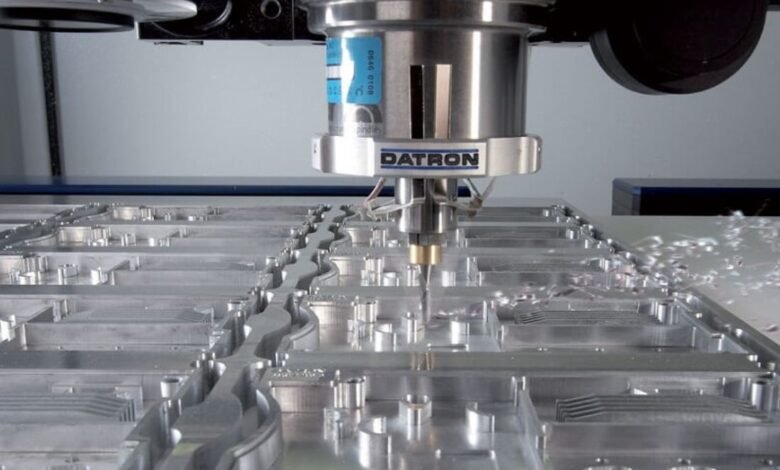
There is a machine in a corner of the shop that no one talks about much. It’s not loud like the CNC mills. It doesn’t have the satisfying, violent thunk of a stamping press. It sits there, quietly, doing its work in a bath of oil, making parts that no other machine on earth could make. It’s an EDM. An electrical discharge machine. And it works by starting tiny, controlled fires, over and over, millions of times, until a part emerges from the chaos.
Just a faint hiss and the steady drip of dielectric oil. The wire never touched the steel. It couldn’t. It would snap.
The Physics of Patience
Then you run a current between them. The voltage builds until it jumps the gap, creating a spark. That spark is hot. Unbelievably hot. Up to 12,000 degrees Celsius . It vaporizes a microscopic piece of the workpiece.
Then it does it again. And again. And again. Thousands of times per second.
It is the opposite of high-speed machining. It is slow, patient, and methodical. But it can do things that no spinning cutter ever could.
Sharp internal corners that a mill could never reach? EDM. Holes angled through hardened steel at impossible geometries? EDM. The machine doesn’t care how hard the material is. It doesn’t care about work hardening or brittleness. If it conducts electricity, the lightning will cut it .
The Three Faces of the Spark
There are three main ways to use lightning in a machine shop, and each one has its own personality.
Wire EDM is the most familiar. A spool of brass wire, often as thin as 0.001 inches, threads through the workpiece like a tiny metal sewing machine . No deburring. No cleanup. Just the part, ready to go.
Sinker EDM, or ram EDM, is different. Instead of a wire, it uses a custom-shaped electrode, often machined from graphite or copper . The electrode is the positive image of the cavity you want to create. It sinks into the workpiece, and the sparks erode the negative space around it. This is how you make injection molds with complex cavities, cooling channels that snake through the steel, and features that would be impossible to reach with a cutter. The electrode wears down as it works, slowly sacrificing itself to create the shape . There is something almost poetic about that. The tool gives its life to the part.
Hole drilling EDM is the specialist. It can drill holes so small and so deep that a conventional drill would snap instantly. Holes 0.065 millimeters in diameter, through a meter of material . These are not drilled; they are burned, one spark at a time, straight through the hardest metals.
The Material That Fights Back
The thing about EDM is that it’s usually the last resort. You don’t send a part to the EDM department because it’s the easy way. You send it there because nothing else works.
Hardened tool steel, the kind that would destroy a carbide end mill in seconds, sits calmly in the EDM tank, slowly eroding. Titanium, which work-hardens and fights every conventional cutter, can’t resist the spark. Carbide, ceramics that conduct, exotic superalloys—all of them yield to the patient, relentless attack of the electrical discharge. “You can’t machine this conventionally,” he said. “By the time you’re done, your tools are garbage and the part is full of stress. But in here?” He gestured at the tank. “It doesn’t know it’s hard. It just knows it’s conductive.”
The Surface That Tells the Truth
There is a quality to an EDM surface that you learn to recognize. It’s a record of the process, a physical history of the part’s creation.
Sometimes, that surface needs to be removed. In aerospace applications, where fatigue life is critical, the “recast layer”—the microscopically altered surface where the spark melted and resolidified the material—must be machined or polished away .
The Man Who Talks to Lightning
The last time I visited Gene’s shop, he was setting up a job that would run overnight. A complex cavity in a block of H13, twenty hours of continuous sparking. He showed me the program, the electrode, the setup.
He shrugged. “The machine’s not waiting. It’s working. Every second, it’s making decisions, adjusting the gap, managing the flush. It’s thinking. But it’s not thinking about the part like I do.”
“What do you mean?”
He tapped the electrode. “This is just a shape. The machine can follow the shape. The machine can start the fires. But I’m the one who decides what gets built from the ashes.”
That’s the truth of EDM machining services.