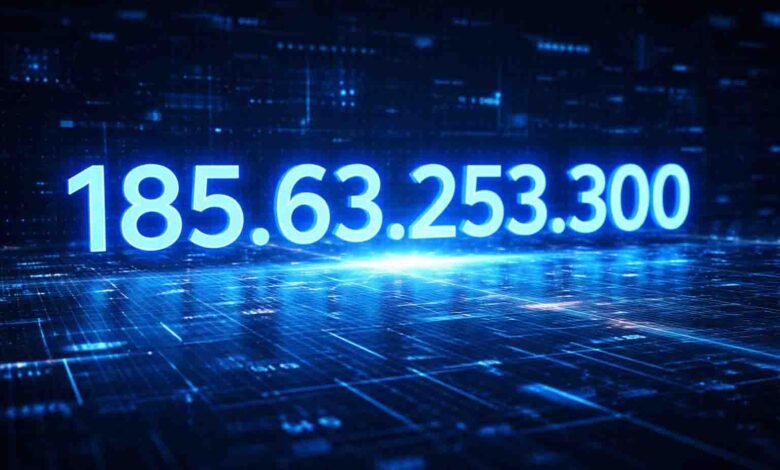
Many people see 185.63.253.300 in logs or online and get confused because it looks like a normal IP address. It appears like something important, but the truth is very different. This simple number often creates big questions for beginners and even for tech users.
In this article, we will explain everything about 185.63.253.300. You will learn why this strange number shows up, why it is not valid, and what it teaches us about how IP addresses work today. We will also keep every idea simple so anyone can understand.
Think of this article as a friendly guide. We will walk step by step, and you will see how this one number can help you understand the whole world of IP addresses.
What Is 185.63.253.300?
The number 185.63.253.300 looks like a real IP address at first. It has four parts. It has dots in the right places. It has the same format that most people see on their computers or Wi-Fi settings. Because of this, many people think it is real.
But even though it looks real, 185.63.253.300 is not a real IP address. It is actually an invalid number. This means it cannot be used on the internet, and no device can have it. So when people see it, they often wonder why it appears anywhere at all.
Sometimes this number is used as a placeholder in training, guides, or software tests. It may also show up because of a small mistake. That is why it appears in many places even though it cannot exist as a real IP address.
Is 185.63.253.300 a Real IP Address?
The simple answer is no. The reason is very easy to understand. Every IP address has four parts, and each part must be between 0 and 255. This is the basic rule of IPv4, and every device must follow this rule.
The number 185.63.253.300 breaks this rule because the last part is 300, which is higher than 255. This means the address is not allowed, and no router, device, or server will accept it. It is instantly marked as invalid.
So if you ever see 185.63.253.300 in your logs, you can know right away that no real device is behind it. It is not a real location. It is not a real computer. It is simply a number that does not fit the IP rules.
How IP Addresses Work
Every device connected to a network needs an IP address so it can send and receive information. Think of an IP address like a home address for your device. It tells the internet where your device is, so data knows where to go.
When you open a website, your device uses its IP address to ask the website for information. Then the website uses its own IP address to send the information back. This is how the internet works every second, even if we never see these numbers.
There are two main types of IP addresses. IPv4 uses short numbers like 192.168.1.1. IPv6 uses longer and more complex numbers. IPv4 is the one most people know. And 185.63.253.300 tries to look like an IPv4 address, but it does not follow the rules.
Why 185.63.253.300 Is Not Valid
IPv4 numbers are made from 32 bits. Each part of the IP address uses 8 bits, which can only show numbers between 0 and 255. This is why each section of an IP must follow this range. Anything above 255 simply does not fit in the system.
The number 300 cannot fit into the IPv4 system because it needs more bits. This is why 185.63.253.300 cannot be saved, stored, or used by any network device. It breaks the math behind the technology, so it is instantly rejected.
Many systems will show an error or warning if this number appears. That is why people often search for it. They want to know why the number is there and whether it is something dangerous or something harmless.
Why This Strange IP Shows Up in Logs
Sometimes 185.63.253.300 appears in logs because of small typing mistakes. A person may write the wrong number by accident. This is very common when working fast or copying data from different tools or screens.
Other times this number appears because of a software error. A system might receive broken data. A proxy or firewall might send incorrect information. Or a plugin may insert malformed values into your logs. These mistakes can easily create invalid IP entries.
There are also cases where bots or scanners send fake IP addresses to test systems. These bots are not using a real network address. They simply try strange numbers like 185.63.253.300 to see how servers react. This is why invalid IPs sometimes look suspicious even though no real device is behind them.
How to Check This IP
The first step is to look at the format. If the last part is higher than 255, then the IP is invalid. This is the fastest and easiest way to check whether 185.63.253.300 is real or not. Just one look can tell you everything.
The next step is to check your logs. Look at how often 185.63.253.300 appears. Does it show up once or many times? A single entry is usually just an error. Many repeated entries may mean a configuration issue or a software problem.
You can also check your proxy settings or firewall rules. Sometimes a misconfigured proxy can insert broken IP values. Fixing these settings will stop invalid numbers from appearing again. Simple log filters can also remove fake or malformed entries.
What an Invalid IP Can Teach You
Seeing a number like 185.63.253.300 can actually help you understand network rules better. It shows how strict the IP system is and why numbers have limits. It also teaches you how easy it is for errors to enter logs.
Invalid IPs also help beginners learn how to validate data. When you know what a correct IP looks like, you can catch mistakes faster. This is helpful for students, new IT workers, and even experienced users who want cleaner logs.
An invalid IP also warns you when there may be a deeper problem. If you see many invalid entries, it may mean your system is not filtering data properly. Fixing this can make your logs cleaner and your security stronger.
How IP Addresses Affect Your Digital Identity
Every time you go online, your device uses an IP address. Websites use this IP to understand where the request is coming from. This helps them show the right content, language, or region settings. Your IP becomes part of your digital identity.
Your IP can also show your approximate location. It may not show your exact home, but it can reveal your city or region. This is why many websites change content based on where you live. They use your IP to guess what you might need.
But invalid IPs like 185.63.253.300 cannot identify anyone. They do not belong to any city. They do not belong to any user. They are simply meaningless numbers that appear due to mistakes or broken data.
IP Addresses and Cyber Risks
Attackers sometimes use fake IPs to test systems. They may send invalid numbers to see how your server reacts. They use tricks like IP spoofing to hide their true location. This is why invalid IPs sometimes appear during scanning activity.
DDoS attacks also focus on IP addresses. Bots may try to overload a target IP with too much traffic. But since 185.63.253.300 is not real, it cannot be attacked or used in this way. It is simply too invalid to be part of any attack flow.
Security tools often check IPs to detect strange behavior. When invalid IPs show up, it may mean your system is receiving corrupted or spoofed data. This is why checking strange addresses helps improve your cybersecurity awareness.
IPv4 vs. IPv6
IPv4 is the old way the internet gives addresses. It uses four numbers, like 192.168.1.1. Each number can only go from 0 to 255. This small range is why 185.63.253.300 cannot exist. It breaks the rules of IPv4.
IPv6 is the new system. It uses longer numbers and letters, divided by colons. IPv6 has an enormous number of addresses. This means almost any device can have its own address without running out. IPv6 also adds better security and efficiency.
Many systems still use IPv4. That is why invalid numbers like 185.63.253.300 show up in older networks. The transition to IPv6 is slow, but it is necessary to support more devices and future technologies like IoT, AI, and smart networks.
Understanding IPv4 and IPv6 helps explain why some IPs are invalid. It also shows the importance of moving to a modern, secure system. Learning this keeps you ready for today’s and tomorrow’s internet.
Everyday Uses of IP Addresses
IP addresses are very important in daily life. Every phone, computer, or smart device uses one. They tell the internet where to send and receive information. Without IPs, your emails, videos, and apps would not work correctly.
Websites use IPs to know which server to connect to. Domain names like www.example.com are turned into IPs by DNS. This helps your browser find the right place. Without IP addresses, the internet would not know where to send your data.
IP addresses also help with location. Streaming platforms show content based on region. Ads, news, and website language can change depending on your IP. They also help networks protect users and detect unusual or risky activity.
Even IoT devices like smart lights and thermostats need IP addresses. Each device must have a unique address to communicate. This makes automation, remote access, and smart home control possible. IPs are the invisible tool that connects all devices safely.
The Future of IP Addressing
The number of devices connected to the internet keeps growing. Phones, computers, smart devices, and cars all need addresses. IPv6 is the future solution. It gives an enormous number of unique addresses for everyone and every device.
New technologies like AI, 5G, and smart cities need fast and reliable networks. IPv6 makes routing simpler and supports massive numbers of devices without conflicts. It also adds better security features built into the system.
Privacy is more important than ever. IP addresses can reveal location and activity. Regulations will likely increase to protect user data. Networks must balance transparency, privacy, and smooth operation. This makes understanding IPs more important in daily life.
The shift from IPv4 to IPv6 also means learning about invalid numbers like 185.63.253.300. These numbers teach how IP rules work and why future systems need stronger, safer, and more efficient designs.
Pros and Cons of 185.63.253.300
Pros
-
Invalid IPs help teach correct IP rules.
-
They show where mistakes or errors occur in logs.
-
Improve understanding of networking basics for beginners.
-
Help clean and organize system logs.
-
Teach why IPv6 is needed for the future.
-
Support cybersecurity awareness and training.
Cons
-
Invalid IPs may confuse beginners.
-
Can trigger false alerts in security systems.
-
People may think it is a real threat.
-
Requires investigation to confirm no real device is involved.
-
Shows weaknesses in old network setups.
-
Repeated invalid entries indicate configuration issues.
Final Thoughts
The number 185.63.253.300 is not a real IP address. It breaks the rules of IPv4 because the last number is too high. No device can use it, and it cannot connect to the internet.
Seeing it in logs or reports does not mean danger. It usually comes from errors, broken headers, or misconfigured systems. It may also appear as a placeholder or in training materials. Understanding this saves time and avoids confusion.
Learning about 185.63.253.300 helps us understand how IP addresses work. It shows the limits of IPv4 and the need for IPv6. It also teaches how to check logs, validate IPs, and protect digital networks safely.
By understanding IP rules, checking data carefully, and keeping networks updated, we can avoid mistakes. We can also prepare for the future of the internet, where every device has a proper, unique, and secure address.
FAQs
Why does 185.63.253.300 appear in logs?
It usually shows up due to typing mistakes, corrupted headers, proxy misconfigurations, or placeholder entries. It does not mean a real device is connecting.
Can 185.63.253.300 be used for training?
Yes. Many IT courses and documentation use it as a safe example. It teaches networking and IP rules without affecting real devices.
How do I check if an IP like 185.63.253.300 is valid?
Check each part of the IP. Every octet must be between 0 and 255. Use validation tools or scripts. If any number exceeds 255, the IP is invalid.
Does 185.63.253.300 indicate hacking?
Not directly. It could appear during scanning or bot activity, but most times it is a system or data error. An investigation is needed before concluding a threat.
Should I block 185.63.253.300?
No. Blocking it is unnecessary because it is not a real device. Instead, focus on proper IP validation, sanitizing data, and correcting system errors.
People Also Read:
The Heart of Cumhuritey: How People Lead, Shape, and Protect Democracy
Why Uvlack Is Becoming a Big Trend in Tech, Art, and Design
Discover LeoMorg: The New Idea Changing Tech and Creativity Today