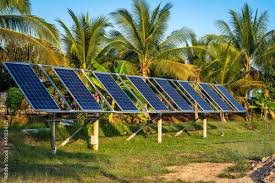
A silent transformation is taking place out of view of city services. Out in the country — on isolated farm homesteads, in hilly backcountry communities, and in small town clusters at the end of dirt roads — people are deciding to stop holding out for an electrical grid that may as well not exist, or best operating on an inspiringly irregular schedule. They’re making their own power instead. And at the center of that shift is a technology that has matured in the last 10 years: the off-grid solar inverter.
This is not fringe survivalist-type stuff. It’s the practical, financial calculus of people who have done the math and know that energy self-reliance is a more reasonable path than dependence on a system that has continually let them down.
The Rural Electrification Problem No One Is Solving Fast Enough
Extending the grid to rural areas is a slow and expensive undertaking, and is often deferred by utility operators that are mainly concerned with customers in urban areas. In fact, the power grid, even in remote areas, is often antiquated – power surges, rolling blackouts, and unpredictable supply are more the rule than the exception.
The ripple effects are significant for rural households. Refrigeration for food and medicine is intermittent. Farming operations that depend on pumping water or charging equipment are continually disrupted. Children study in poor light. Small businesses can’t run machines predictably or serve customers reliably.
These are not abstract issues. And these are the lived experiences of communities frozen out of utility expansion timetables for decades.
Solar energy — in the form of a smartly designed and installed off-grid system — addresses all these challenges immediately and once and for all, without waiting for infrastructure investment that might not arrive until after the next generation.
What Solar Independence Actually Enables
Solar living independence is not about being off the grid. It’s about getting back to the essentials for a viable modern life — light, refrigeration, communication, clean water, productive work — without having to plead or petition for service from an external provider. In practical terms, a country home or small farm equipped with the right panel array, battery bank, and a high-quality off-grid solar inverter can gain power that will make everyday life a bit easier:
Consistent Lighting: And now it’s the evening, and we are productive. Children get their udders in school. Houses are safely run after dark. This one change, simple as it seems, has measurable effects on educational outcomes in rural areas as well as on the use of life.
Reliable Food Storage: A fridge running day and night on solar power eliminates spoilage that quietly drains household food budgets in areas underserved by the grid. Meanwhile, small traders in the countryside could start to sell perishable produce with some degree of reliability.
Water Access: Solar-powered borehole pumps now supply clean water to homes that once had to schedule their lives around the availability of generator fuel or grid power. In irrigation and livestock production, this reliability translates literally into yield and income.
Productive Work From Any Location: That’s a boon for work-from-home operators, farmers, and small business owners, who can now count on the stability needed to run a professional operation — charge equipment, make communications, power tools — regardless of the grid’s mood swings.
Community Ripple Effects: When a single homestead or farm goes off the grid with energy, the effect ripples outward. Neighbours watch and ask questions, and then they do just that. Some depth for local installers. A community solar-powered independence ecosystem emerges gradually, but steadily.
The Lifestyle Choice That Keeps Paying Forward
Choosing to be energy self-sufficient with solar power in the country, then, is at once an infrastructure matter and a commitment to future lifestyle. It is a choice to cease measuring your daily life against the dependability of outside systems and to instead construct upon a foundation you have some control over.
The tools to take this route have never been more available, affordable or reliable. For rural towns that have had enough of waiting, the road finally opens up — and it runs on the sun.