Does Yoga Actually Help Students with Mental Health? Here’s What the Research Says

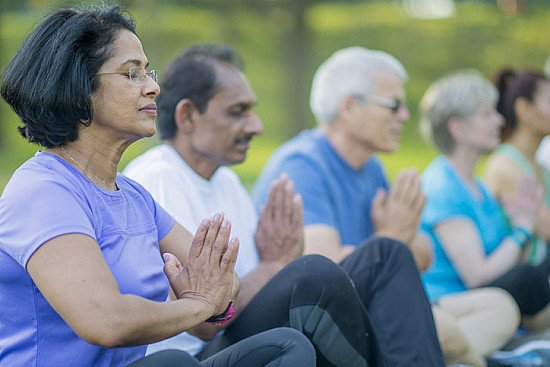
Yoga keeps appearing in student wellness programs lately. Almost everywhere. And it’s not just there as a trendy extra. Schools are turning to it because student stress has gotten real. When academic pressure builds to the point where students are barely sleeping, barely focusing, and barely keeping up, the conversation shifts from self-care tips to what actually helps? More and more research is pointing toward one answer. Yoga.
Here’s the thing. The research on yoga and student mental health has quietly become hard to dismiss. And if you’re someone navigating online coursework, a heavy semester, or that particular kind of burnout that settles in around week nine, this is actually worth your time to read.
What’s Happening in Students’ Heads Right Now
Five years ago, “student mental health” was a talking point. Now it’s a crisis, and most universities are playing catch-up.
Studying is the easy part to name. It is the combined hit of workload, comparison, and the quiet panic of not knowing if you’re on the right track at all. A combination that creates significant psychological distress and directly impacts academic outcomes. They affect memory, concentration, and the ability to actually learn. That’s where the real academic cost shows up. Frontiers
That last part matters. It’s not just about how a student feels; it’s about how stress physically rewires their ability to learn, focus, and perform. When the nervous system is constantly in threat mode, higher-order thinking takes a back seat. Memory consolidation weakens. Decision-making slows. It’s biology, not a discipline.
And for online students especially, the isolation compounds everything.
So What Does Yoga Actually Do? (The Non-Woo Answer)
Ignore the incense and the aesthetic yoga pictures for a moment. What yoga really does is reset your stress response. The breathing and stillness signal your nervous system to ease off the constant “fight or flight” mode. With time, your brain starts handling pressure differently. Instead of reacting instantly, it learns how to slow down, think clearly, and stay balanced. ScienceDirect
That’s the mechanism. Not magic. Not mysticism. It’s training your nervous system to process pressure without spiraling. Breathwork slows the heart rate. Sustained postures build what researchers call “distress tolerance.” And the mental stillness that comes from a consistent practice? That translates directly into better focus during study sessions and clearer thinking under pressure.
The Clinical Evidence Is More Solid Than You’d Expect
A 2024 randomized controlled trial involving 129 university students tested a 12-week yoga program twice weekly, measuring outcomes in stress, emotional well-being, state anxiety, and trait anxiety.
What makes that finding interesting is the trait anxiety result. State anxiety, the pre-exam panic. But trait anxiety is the deeper, chronic undercurrent that students carry semester after semester. Moving that needle is harder, and yoga moved it.
A separate 2025 study at the University of Pécs followed 220 medical students, one of the highest-pressure academic populations that exists, through a 10-week yoga intervention and found significant reductions in stress, anxiety, and depression, alongside improved sleep quality and emotional regulation. Psychology Today
Medical students. Ten weeks. Measurable results. That’s not a soft finding.
When the Pressure Hits, and Focused Effort Feels Impossible
By week seven or eight, most students aren’t thinking about wellness routines or study strategies. The course load feels unmanageable. That’s the moment a lot of online students search for someone to do my online class for me. And honestly? That impulse makes complete sense. It’s not laziness, it’s a depleted brain trying to protect itself.
What yoga addresses is the root of that depletion. Not the symptom. Research consistently shows that students who build a consistent movement and breathwork practice, even a short one, have better emotional regulation, better focus, and a higher threshold before they hit that wall. That’s the real value here.
What About Exams Specifically?
Exams bring a special kind of stress. Interestingly, it is found in studies that breathing-focused yoga practice helps students handle that pressure better than yoga that focuses only on movement. The undergraduates suggested that the breath component may be the most powerful lever for cognitive clarity under pressure. PubMed Central
That’s worth paying attention to. Try this sometime: sit down and spend ten minutes before an exam just focusing on your breathing. It sounds basic, but it’s measurably shifting the mental state you bring into that room.
Students who search for someone to take my exam for me often aren’t struggling with ability. They’re dealing with pure mental overload. Too much pressure, too little breathing room.
Building a pre-exam breathwork habit can meaningfully change that experience over time, and your brain learns how to stay calm when the pressure shows up.
How to Actually Make This Work (Without Overhauling Your Life)
The research points to a simpler threshold: two to three sessions per week, roughly 30–45 minutes each, sustained for at least eight weeks. That’s the dosage that moves the mental health markers in the studies worth trusting.
If you’re short on time, prioritize breathwork over postures. If you’re short on space, YouTube and free apps cover the basics well. The barrier to entry is genuinely low, which is part of why yoga keeps appearing in the university wellness research. It scales. It costs almost nothing. And the results, for students specifically, are backed by more clinical evidence than most people realize.
And when the assignments pile up so badly that even good habits can’t keep up. In those weeks, A lot of smart students get a little help. They use do my online class for me services to catch their breath.
The Bottom Line
Yoga isn’t going to fix a broken academic system. And it won’t magically make a brutal semester easy either. But it’s also not just another wellness buzzword people throw around.
Recent clinical studies from 2024 and 2025 show something pretty clear. When students practice yoga consistently, anxiety tends to drop. Emotional control improves. Even focus and thinking get sharper during stressful academic periods.
For students pushing through online coursework and starting to feel worn down, that kind of support matters more than it might sound. And the best part? You don’t need hours for it. A little time goes a long way.