Brinell Hardness Tester Installation, Calibration, and Maintenance Services in the UK: A Complete Guide

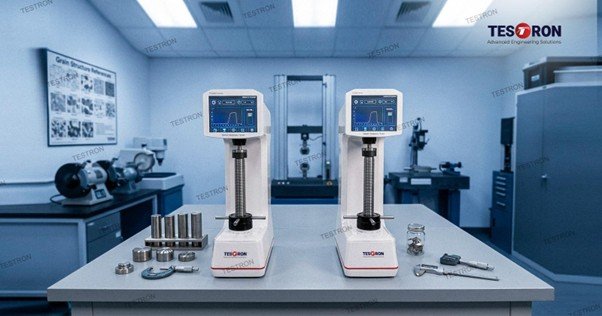
The performance of equipment can never be left to chance, particularly when your quality control process depends on accurate hardness readings. A Brinell hardness tester in the UK enables manufacturers to have dependable test results, meet standards of compliance and minimize the production risks. Hardness testing is relevant in testing the material in industries such as automotive, aerospace, foundries or heavy engineering.
According to the National Association of Manufacturers, the sector contributed over $2.96 trillion to the US economy in Q4 2025, and every dollar spent in manufacturing generates a $2.69 impact across the broader economy. Reliable Brinell hardness tester setups are part of what keeps that output consistent.
In this guide, we discuss everything you should know about buying and maintaining a Brinell hardness tester in the UK.
Why Properly Installing a Brinell Hardness Tester in the UK Matters
Installing a hardness testing system is not just about placing the machine. You also have to ensure proper stability, alignment, load accuracy and stable readings. Test values can differ when the machine is not placed correctly or when environmental factors are not considered.
For instance, a Brinell hardness tester machine always has to be placed on a vibration-free surface with enough space for operator access and handling of the specimen. Things like power supply checks, leveling and indicator movement verification also matter during commissioning.
Many Brinell hardness tester manufacturers choose professional installation as it minimizes the chances of errors and ensures the tester is production-ready right from the first day.
Understanding Brinell Testing Applications
Brinell testing is commonly used for castings, forgings, structural steel, aluminum alloys, and other coarse-grained metals. It uses a hardened ball indentor under a specified load to create an impression that is measured and converted into hardness values.
Because of its suitability for larger parts and rougher surfaces, the Brinell Hardness Tester in the UK is widely used in heavy industry and machine shops where durable and repeatable testing is required.
Popular Brinell Hardness Tester Models Available In the UK
Testron Group offers multiple Brinell systems designed for different industrial needs.
HB-3000A Advanced Three Indentor Digital Model
This advanced system supports multiple indentors and digital controls, making it ideal for facilities handling varied materials and test loads. It is a good fit for labs that require flexibility and consistent throughput. Digitally controlled systems such as this are popular with businesses interested in an automatic Brinell hardness tester.
HB-3000C Practical Digital Model
Designed for straightforward production environments, this unit balances usability and dependable testing performance. It is well suited for workshops and medium-scale plants seeking efficient day-to-day operation.
TTB-3000D Advanced Digital Model
A modern option built for higher precision and operator convenience. It supports structured testing workflows where repeatability and productivity are priorities.
HB-3000E Electronic Model
This electronically controlled machine is suitable for facilities seeking smooth load application and dependable measurement consistency.
TT ECO Series Economical Model
An entry-level option for businesses that need reliable hardness testing while managing budgets. It is often considered when evaluating overall Brinell hardness tester price versus functionality.
Calibration: Why Accuracy Must Be Verified
Even high-quality testers require regular calibration. Over time, wear, load drift, and mechanical changes can affect results. Scheduled calibration helps confirm the tester is operating within accepted tolerances.
Calibration generally includes:
- Verification of applied loads
- Indentor condition checks
- Optical measurement accuracy checks
- Reference block testing
- Repeatability review
Meeting the correct Brinell hardness tester standard is essential for industries working with audits, certifications, or export requirements.
Preventive Maintenance for Long Equipment Life
Regular maintenance prevents any sudden downtime and protects your investment. When a Brinell hardness testing machine is maintained properly, it will deliver consistent performance for years.
Recommended maintenance tasks include:
- Cleaning contact surfaces and test tables.
- Checking ball indentors to determine wear.
- Oiling for moving parts.
- Checking display and controls.
- Ensuring a seamless load cycle operation.
- Checking the measurement optics or digital systems.
Heavy-Duty and Portable Testing Needs
Some industries test large castings, forgings or oversized components. A heavy-duty Brinell hardness tester is usually preferred in such cases as it is capable of handling substantial workpieces and demanding shop-floor use.
In situations where mobility is a key factor, field inspection teams may use a portable Brinell hardness tester for on-site checks, maintenance projects or large installed structures. Portable solutions are useful when moving the component is impractical.
Choosing the Right Brinell Hardness Tester in the UK for Your Facility
When choosing the right Brinell hardness tester in the UK, you need to consider these factors:
- Material types being tested
- Required load range
- Sample size and weight
- Production volume
- Manual or digital preference
- Data recording needs
- Budget and support requirements
The right Brinell hardness testing equipment should match both your present workload and future expansion plans.
How a Professional Equipment Supplier Helps You
Beyond supplying material test equipment, Testron Group supports industrial users with services that help maximize machine performance. Depending on project needs, businesses may request:
- Installation and commissioning
- Operator guidance
- Calibration support
- Preventive maintenance
- Performance checks
- Technical consultation for model selection
- Free trials or demos for suitable requirements
This makes it easier for manufacturers to deploy a Brinell hardness tester in the UK with confidence.
Why Service Support Matters in Business Operations
Since production timelines are tight and quality delays may be costly, having professional support helps reduce downtime and keeps inspection workflows moving.
A dependable Brinell hardness testing instrument backed by responsive service can improve purchasing value over the long term, especially for factories that test materials daily.
Conclusion
Choosing the right machine is just one of the steps. Proper installation, frequent calibration and preventive maintenance are what make your Brinell Hardness Tester in the UK maintain its performance year after year.
If you are planning to upgrade your testing process, contact Testron Group or request a demo to explore the best Brinell solution for your operation.