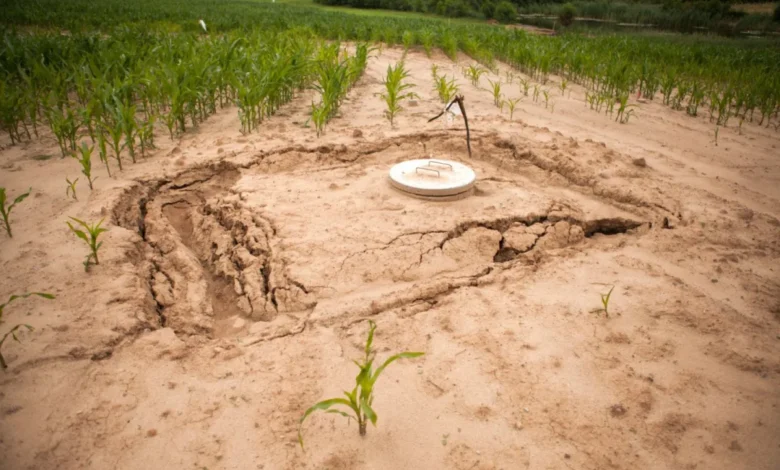
The paddock corner stays soft in January. The paddock corner stays soft in June. The paddock corner stays soft through a dry March when the rest of the property has gone hard enough to crack. For an equestrian owner in Wellington whose barn and house both feed one undersized system, that wet patch usually means the field has quit, and the estimate for drain field installation wellington fl turns up a week later as one number with nothing underneath it. Here is the argument of this piece: a replacement is five separate jobs rather than one, and a quote written as a single figure hides which of the five is driving the total. Pull it apart and you can question it stage by stage.
Replacement Cost Splits Into Five Separate Stages
Every drain field replacement I have pushed paperwork through breaks into the same five pieces. Evaluation and permitting, excavation and haul-off, aggregate and pipe, the connection back to the tank outlet, and putting the surface back the way you found it. A contractor who prices those separately is not padding anything; he is showing you where his crew’s days go, which is the only honest way to compare two proposals that sit four thousand dollars apart.
Drain field replacement involves multiple stages with distinct work and cost factors.
| Stage | Work Involved | What Affects Cost |
| Evaluation and Permitting | Site assessment and engineered design | Permit fee and engineering |
| Excavation and Haul-off | Removal of failed piping and aggregate | Cubic yards excavated |
| Aggregate and Pipe | New rock, distribution pipes, laterals | Square footage and materials |
| Tank Outlet Connection | Connection to tank and inlet adjustments | Tank depth and soil |
| Surface Restoration | Sod, topsoil, driveway repair | Square feet restored |
In practice the two stages that surprise owners are the first and the last, because neither one involves the field itself. Nobody budgets for a soil evaluation and a drawing. Nobody budgets for sod, a rehung gate and a load of shell to fix the driveway an excavator chewed up on its way out, and those are the items a low bid quietly leaves for you.
Site Access Is Where Acreage Prices Diverge
A quarter-acre lot in town gives a crew one obvious approach. Ten acres with a barn, fence lines, a paddock and a shell driveway gives them four possible approaches, and three of those cost somebody money. The machine has to physically reach the field, and whatever it drives across becomes part of the job whether the estimate mentions it or not. As of August 2026, the septic guidance published by the US EPA still advises keeping vehicles and heavy equipment off a drain field entirely, because traffic compacts the soil and blocks the drainage and infiltration the whole field depends on. So the cheapest route, the one straight across the new bed, is never the route a careful crew takes.
Before you meet anybody, pull your parcel up on PAPA, the Palm Beach County property appraiser’s free public portal, and print the aerial with the dimensions on it. That single sheet settles most of the arguing about where the shell driveway ends, how wide the gate really is, and how much clearance sits between the old field and the well. (I have watched two grown men debate a fence line for twenty minutes; the printout ended it in about four seconds.) Bring it to every walkthrough and ask each bidder to mark his route on it in pen.
Stage By Stage On One Wellington Property
Say the failed field runs nine hundred square feet, sits behind the paddock, and the only equipment route crosses a shell driveway. Evaluation and permitting comes first, and it is genuine work: a site evaluation, soil profiles, a drawing and the county application. Call it somewhere in the eight hundred to twelve hundred dollar range as an illustrative figure, higher once a well, a water trough and a fence line all have to be drawn around. Excavation and haul-off then prices by the cubic yard, and on a horse property it prices high, because saturated material cannot simply be spread across pasture the horses graze.
Aggregate and pipe is the one stage that behaves like a spreadsheet. Nine hundred square feet of field means a knowable quantity of rock, header, laterals and fittings, so two bidders working from the same design should land close to each other here. The connection back to the tank outlet swings on depth and on what the crew finds when they open the ground, which is why an experienced estimator will give you a range instead of a promise. One rule at this stage is not negotiable, and no contract language changes it: nobody leans into an open tank. Septic gases displace oxygen and can kill in under a minute, so if a person goes down near an open lid, you call 911 and you do not climb in after them.
Restoration is the line item that vanishes from cheap bids. It is also the one you look at every single day.
Questions That Expose A Missing Line Item
A missing stage rarely announces itself. It hides as a low total, and you meet it again as a change order in week three, usually on the day the sod truck was supposed to come. Four questions, asked at the walkthrough, will smoke out almost all of it.
- Which of the five stages are inside this number, and which are excluded? A good answer walks evaluation, excavation, materials, connection and restoration separately without being pushed.
- How many cubic yards are you hauling off, and where does the material go? A specific yardage and a named disposal site beats a vague allowance every time.
- What route will the machines take across the property, and who repairs it? Listen for the driveway, the gate and the paddock named out loud.
- Are the permit fee and the engineered design inside your price or billed on top? This one question can move a total by a thousand dollars.
Ask all four of every bidder and take notes in the same order each time. What you get back is not just a cheaper price; it is a comparison you can actually defend to a spouse or a business partner. The bidder who answers all four without hedging is usually the one whose crew has done this on acreage before.
Budget The Evaluation And The Restoration Too
Type drain field installation wellington fl into a search bar and you will get a page of companies whose numbers are not comparable until you make them comparable. Do that work yourself, on paper, before you sign anything. Budget the front end and the back end, the evaluation and the restoration, because those are the stages that turn a fair quote into a surprise. On a horse property the paddock tells you before the tank does, and by then the only decision left is whose breakdown you trust.