A reliable water heater is essential for every home, providing consistent hot water for bathing, cooking, cleaning, and other daily activities. Over time, however, water heaters can lose efficiency, develop leaks, or fail entirely, necessitating a professional water heater replacement. Understanding when and how to replace a water heater, the types of systems available, and maintenance considerations can help homeowners avoid unexpected problems, reduce energy costs, and ensure a steady supply of hot water for years to come.
Replacing a water heater involves more than simply installing a new tank. Proper removal of the old unit, correct sizing, appropriate installation techniques, and compliance with local building codes are critical for safety, efficiency, and longevity. A professional water heater replacement ensures that the system operates optimally, meets household demands, and prevents future issues such as leaks, corrosion, or inadequate water temperature. By gaining a comprehensive understanding of the replacement process, homeowners can make informed decisions that improve comfort and protect their investment.
Signs That You Need a Water Heater Replacement
Identifying the right time for a water heater replacement can prevent inconvenient breakdowns and costly emergency repairs. Common signs that indicate a replacement may be necessary include inconsistent water temperature, strange noises, and leaks around the tank. Rusty or discolored water may suggest internal corrosion, which can compromise both the water quality and the integrity of the tank.
Other indicators include a noticeable decline in hot water supply or pressure, longer wait times for water to heat, and visible sediment buildup in the tank. Frequent repairs, particularly in older units, may also signal that replacement is more cost-effective than ongoing maintenance. Recognizing these warning signs early allows homeowners to plan for a replacement before experiencing complete system failure, ensuring continuous access to hot water without disruption.
Types of Water Heaters Available
When considering a water heater replacement, understanding the various types of water heaters is essential for selecting the right system for your home. Traditional tank water heaters store a set volume of hot water and are available in electric, gas, and propane models. These systems are generally more affordable initially and provide reliable hot water for most households, although they may experience standby heat loss and limited capacity.
Tankless or on-demand water heaters heat water only when needed, offering continuous hot water without the need for a storage tank. They are highly energy-efficient and can reduce utility bills, but installation costs are typically higher, and the system may require upgrades to household plumbing or electrical capacity. Heat pump water heaters are another energy-efficient option, using electricity to transfer heat from the surrounding air to heat water, which can significantly reduce operating costs. Solar water heaters harness renewable energy to heat water, providing environmental benefits and long-term savings, though they may require additional space and upfront investment.
Selecting the right type of water heater depends on household size, hot water usage, budget, and energy efficiency goals. Consulting with a professional ensures the chosen system meets the home’s specific requirements.
The Water Heater Replacement Process
Replacing a water heater involves several critical steps that ensure safety, efficiency, and proper operation. The process begins with a thorough assessment of the existing unit, including an inspection of plumbing connections, electrical components, venting, and overall system condition. Proper assessment helps identify potential issues and ensures the new water heater is correctly sized to meet household demands.
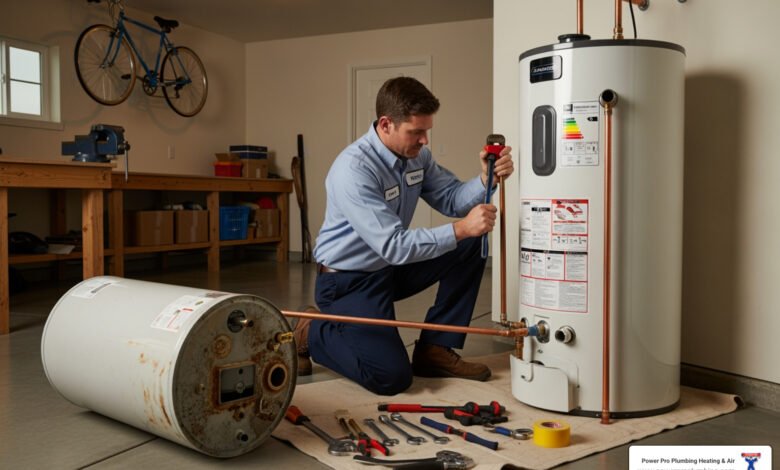
The old water heater is then safely drained, disconnected, and removed. Special attention is given to handling fuel lines, electrical connections, and venting to prevent accidents or damage during removal. Next, the installation area is prepared by inspecting the water supply lines, adjusting plumbing as necessary, and ensuring proper venting for gas or propane systems.
The new water heater is installed according to manufacturer specifications and local building codes. Connections are carefully sealed, venting systems checked, and electrical or gas lines verified for safety. After installation, the system is tested to ensure proper operation, water temperature, and pressure. A professional replacement guarantees that the system functions efficiently, complies with regulations, and provides reliable hot water for years to come.
Common Problems Addressed During Replacement
A professional water heater replacement addresses several common problems that may compromise system performance. Leaks caused by corrosion or failed valves are resolved during replacement, preventing water damage to floors and walls. Sediment buildup, which reduces efficiency and shortens tank lifespan, is removed with a new unit, ensuring consistent hot water supply.
Other problems include inconsistent water temperature, inadequate hot water, or faulty thermostats. A properly installed replacement resolves these issues and ensures that the household has reliable and safe access to hot water. By addressing both existing problems and potential future risks, professional replacement extends the life of the system and improves overall household comfort.
Selecting a qualified professional is crucial for a successful water heater replacement. Homeowners should choose licensed and insured contractors with experience in installing the specific type of water heater required. Checking reviews, references, and examples of previous work can provide insight into a contractor’s reliability and expertise.
A reputable professional offers transparent pricing, detailed estimates, and clear explanations of the replacement process. They ensure compliance with local building codes, verify that connections are secure, and provide guidance on maintenance to maximize the lifespan of the new unit. Choosing the right professional ensures safety, efficiency, and peace of mind.
Maintenance Tips After Replacement
Maintaining a new water heater is essential to prolong its lifespan and ensure consistent performance. Regular inspection of the tank, valves, and connections can prevent leaks and detect minor issues before they become major problems. Flushing the tank periodically removes sediment buildup, improving efficiency and reducing the risk of corrosion.
Monitoring the temperature settings ensures optimal water heating without risking scalding or excessive energy consumption. Checking pressure relief valves, insulation, and anode rods further protects the system and maintains efficiency. Professional inspections every few years can help identify potential issues, ensuring the water heater continues to operate reliably and safely.
Energy Efficiency Considerations
Modern water heaters offer significant energy efficiency improvements compared to older units. Choosing an energy-efficient system, such as a tankless or heat pump water heater, can reduce energy consumption and lower utility bills. Proper installation and insulation of the unit and surrounding pipes further enhance efficiency.
Homeowners may also qualify for rebates, incentives, or tax credits for installing energy-efficient water heaters. These programs offset upfront costs while promoting sustainable energy use. By prioritizing efficiency, homeowners save money, reduce environmental impact, and enjoy consistent hot water supply.
The cost of water heater replacement varies depending on the type of system, size, fuel source, and complexity of installation. Tank water heaters generally have lower upfront costs, while tankless or high-efficiency units are more expensive but provide long-term savings through reduced energy consumption.
Labor costs depend on the installation complexity, including modifications to plumbing, electrical upgrades, or venting adjustments. Additional expenses may include permits, disposal of the old unit, and optional maintenance packages. While cost is a significant consideration, investing in professional replacement and quality materials ensures long-term reliability and minimizes the risk of future repairs.
Benefits of Professional Water Heater Replacement
Professional replacement provides numerous benefits beyond restoring hot water supply. Safety is a primary concern, as improper installation can lead to leaks, electrical hazards, gas leaks, or pressure issues. A professional ensures that all safety measures are met and that the system operates within recommended guidelines.
Efficiency and performance are also improved, with properly sized and installed systems delivering consistent hot water while reducing energy waste. Homeowners gain peace of mind knowing that the replacement adheres to building codes and manufacturer specifications. Additionally, many professionals provide warranties on labor and equipment, offering protection against future issues.
Conclusion
A water heater replacement is an essential investment for maintaining comfort, safety, and efficiency in any home. Recognizing the signs of an aging or malfunctioning water heater, understanding the types of systems available, and selecting a professional contractor ensures that the replacement process is smooth, safe, and effective. Proper installation, combined with regular maintenance, enhances energy efficiency, reduces utility costs, and prolongs the lifespan of the system.
By prioritizing professional water heater replacement, homeowners protect their property, improve quality of life, and enjoy a reliable supply of hot water for years to come. Whether upgrading to a more energy-efficient model, addressing leaks and inefficiency, or installing a new system, investing in quality materials and skilled workmanship ensures long-term comfort and peace of mind.