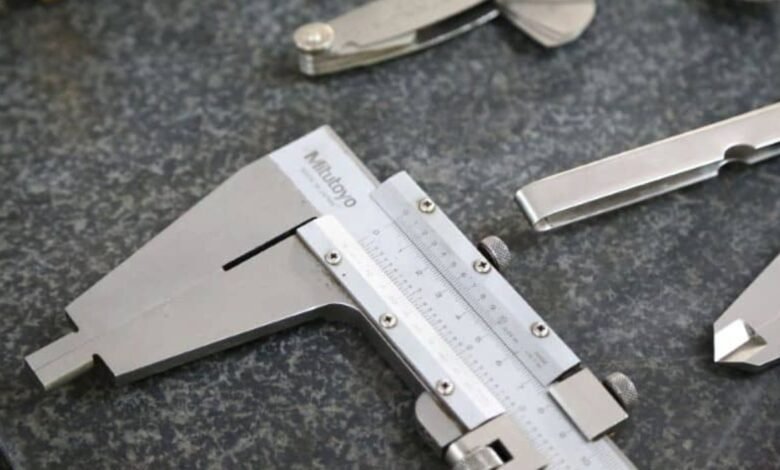
Getting started in machining means learning how three core elements work together: tooling, measurement, and workholding. Each plays a critical role in producing accurate, repeatable parts. For beginners, the challenge isn’t just understanding each component individually—it’s understanding how they connect within a complete setup.
It’s easy to focus on cutting tools alone, but without proper workholding and accurate measurement, even the best tools won’t deliver consistent results. A balanced approach is what builds a reliable foundation. Starting with dependable components like pitbull clamps can immediately improve part stability and help reduce unnecessary movement during machining.
Below are five key things every beginner should understand to build a strong, effective setup.
Understanding What Each Tool in Your Setup Actually Does
One of the most important lessons for beginners is knowing the purpose of each tool in the setup. It’s not enough to have the right equipment—you need to understand how and why each piece is used.
Your setup typically includes:
- Cutting tools that remove material
- Measurement tools that verify dimensions
- Workholding tools that secure the part
Each of these serves a different function, but they all work together to produce accurate results. If one part of the system is weak, it affects everything else.
For example, even if your cutting tool is performing well, poor workholding can cause the part to shift, leading to dimensional errors. Similarly, without proper measurement, you may not catch those errors until it’s too late.
Understanding these relationships helps you make better decisions and avoid common beginner mistakes. It also builds confidence, allowing you to troubleshoot issues more effectively as they arise.
Workholding Tools Like 5C Collets and Vises Keep Parts Secure
Workholding is one of the most overlooked aspects of machining, especially for beginners. However, it’s one of the most critical factors in achieving accuracy and repeatability.
If your part isn’t held securely, it doesn’t matter how precise your machine or tools are—the results will be inconsistent.
Using reliable solutions like a self centering vise ensures that your part is properly aligned and held in place. This type of vise automatically centers the workpiece, reducing setup time and improving repeatability across multiple parts.
For round or cylindrical parts, a 5c collet provides excellent grip and concentricity. This is especially useful when precision is required, as it minimizes runout and keeps the part stable during machining.
Strong workholding offers several key benefits:
- Improved dimensional accuracy
- Reduced vibration and tool chatter
- More consistent results across runs
- Faster and more reliable setups
For beginners, focusing on secure and stable workholding is one of the quickest ways to improve machining results.
Measurement Is What Confirms Your Results
While tooling and workholding create the part, measurement is what confirms whether it meets specifications. Without accurate measurement, you’re essentially guessing.
Beginners should develop the habit of measuring frequently throughout the process—not just at the end. This helps catch small deviations early and prevents them from becoming larger issues.
Consistent measurement also builds understanding. By checking your work regularly, you start to see how changes in setup or tooling affect the final result. This feedback loop is essential for improving your skills over time.
Simplicity Leads to Better Results Early On
It’s common for beginners to think they need complex setups to achieve good results. In reality, simpler setups are often more effective, especially when you’re still learning.
A straightforward setup allows you to:
- Focus on fundamentals
- Identify and fix issues more easily
- Build consistency in your process
Adding too many tools or variables at once can make it harder to understand what’s working and what isn’t. Starting simple gives you a solid foundation to build on as your skills improve.
Consistency Is More Important Than Speed
Speed often becomes a focus early on, but consistency is what truly matters in machining. Producing accurate parts repeatedly is far more valuable than producing them quickly with inconsistent results.
Consistency comes from:
- Using the same setup methods each time
- Verifying alignment and positioning
- Applying reliable measurement practices
As you become more consistent, speed will naturally improve. Rushing the process too early can lead to mistakes that slow you down in the long run.
Conclusion
For beginners, understanding the relationship between tooling, measurement, and workholding is the key to building a successful machining setup. Each element plays a role, and when they work together, they create a system that produces accurate and reliable results.
By focusing on tool purpose, secure workholding, consistent measurement, simplicity, and repeatability, you can avoid many common mistakes and build strong foundational skills.
Machining is a process of continuous improvement. Starting with the right approach ensures that every adjustment you make moving forward leads to better performance and greater confidence in your work.